
Avon Vacuums | Updated June 28, 2026
Quick answer: the best vacuum for hardwood floors is a canister or switchable upright with a soft parquet brush, strong but controllable suction, rubberized wheels, and no spinning carpet brush beating against the floor. For homes with mostly hardwood, a Miele or SEBO canister with a dedicated hard-floor tool is usually the safest choice. For homes with hardwood plus carpet or area rugs, choose a machine with both a parquet brush and an electric powerhead, or an upright like the SEBO FELIX Premium that can switch from carpet cleaning to hard-floor cleaning properly.
Picture a center-hall colonial in Farmington with wide-plank oak that the previous owners refinished right before closing. The floors look beautiful. The new owner inherits an old upright, runs it across the living room, hears grit dragging under the brush roll, and winces. They are right to wince. Hardwood damage usually does not happen in one dramatic scratch. It happens through thousands of small passes with the wrong tool.

Why Hardwood Floors Need a Different Vacuum Strategy
Carpet hides debris inside fibers. Hardwood leaves debris sitting on the surface. That sounds easier, but it creates a different risk: grit becomes sandpaper. If a vacuum pushes grit ahead of the nozzle or grinds it under a spinning brush roll, the finish slowly dulls. You may not see a scratch the first day. Over time, traffic lanes lose their shine, especially near kitchens, mudrooms, dog doors, and entryways.
The job on hardwood is simple: lift fine dust, pet hair, crumbs, grit, and pollen without dragging, scattering, or grinding. That requires a tool that keeps gentle contact with the floor, directs debris into the suction path, and does not slap the finish with stiff bristles.
The Best Brush for Hardwood Floors
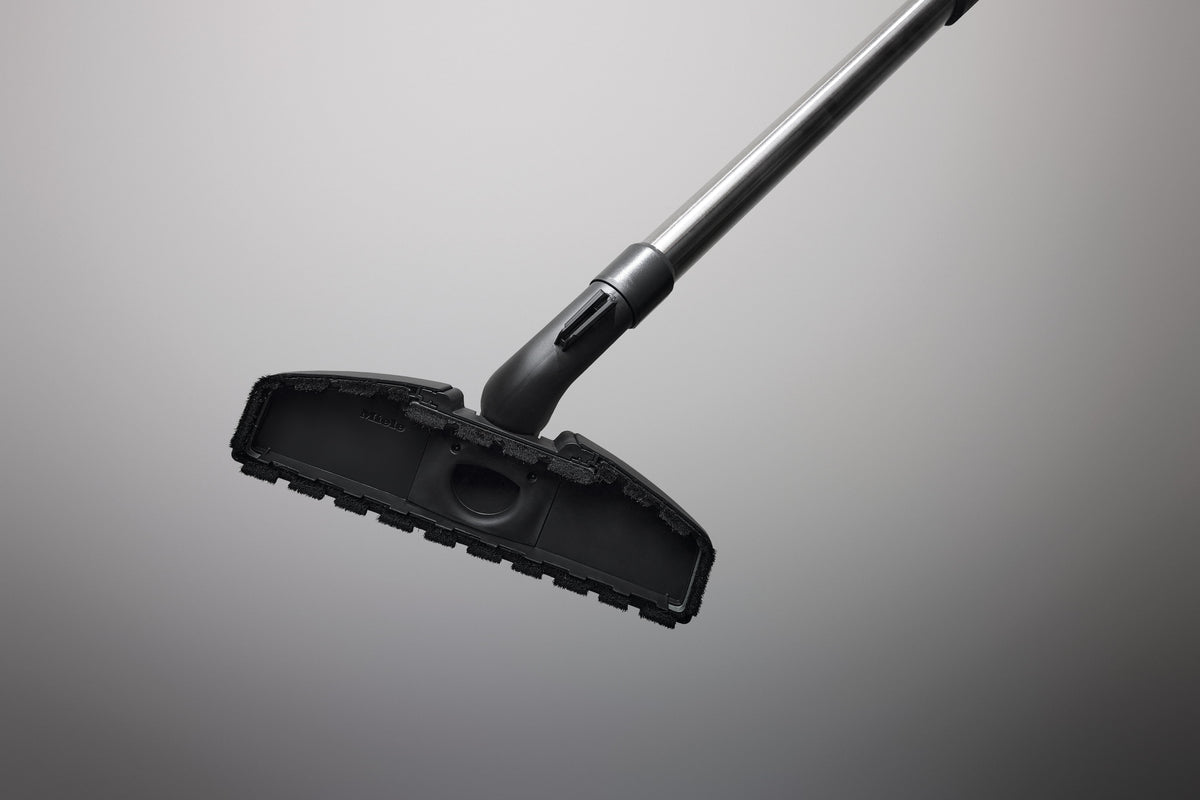
Look for a parquet brush or smooth-floor brush with soft bristles. The bristles sweep debris into the airflow and help the tool glide instead of scraping. A good floor brush also has a low enough profile to get under furniture, enough width to clean efficiently, and wheels or felt strips that do not mark the floor.
A carpet powerhead is different. It uses a spinning brush roll to agitate carpet fibers. That is exactly what you want on carpet and exactly what you usually do not want on exposed wood. If your vacuum has a powerhead, make sure the brush roll can be turned off before using it on hardwood. If it cannot, use a dedicated hard-floor tool instead. The National Wood Flooring Association (NWFA) likewise lists vacuuming on the bare floor setting as part of routine wood-floor cleaning. Our guide to parquet brushes vs. combination nozzles compares the two common hard-floor tools.

Canister vs Upright for Hardwood Floors
For mostly hardwood homes, canisters usually win. The motor rolls behind you while a lightweight floor head does the work. That means less weight on the floor, better control around furniture, and easier switching between bare floors, stairs, baseboards, and upholstery. A canister also lets you choose the exact floor brush for the surface instead of forcing every floor through one upright head.
Uprights can still be good if they have brush-roll shutoff or a true hard-floor mode. The problem is that many upright vacuums are carpet machines first. They tolerate hard floors, but they do not specialize in them. If your home is 80% hardwood, do not buy a carpet-first upright unless it has a proper hard-floor setup. For homes split more evenly between hard floors and carpet, see canister vs. upright for mixed floors.
Best Vacuum Types by Hardwood Home
Swipe horizontally to compare every column →
| Your home | Best vacuum direction | Why |
|---|---|---|
| All hardwood, minimal rugs | Miele or SEBO canister with parquet brush | Light floor tool, soft bristles, excellent edge and furniture cleaning |
| Hardwood plus area rugs | Canister with parquet brush plus rug tool | Safe on wood but still capable on rugs |
| Hardwood downstairs, carpet upstairs | Canister with electric powerhead or SEBO FELIX | Dedicated tools for both surfaces |
| Pets on hardwood | Sealed bagged canister or switchable upright | Helps contain hair and dander; no bagless bin to empty |
Miele for Hardwood Floors
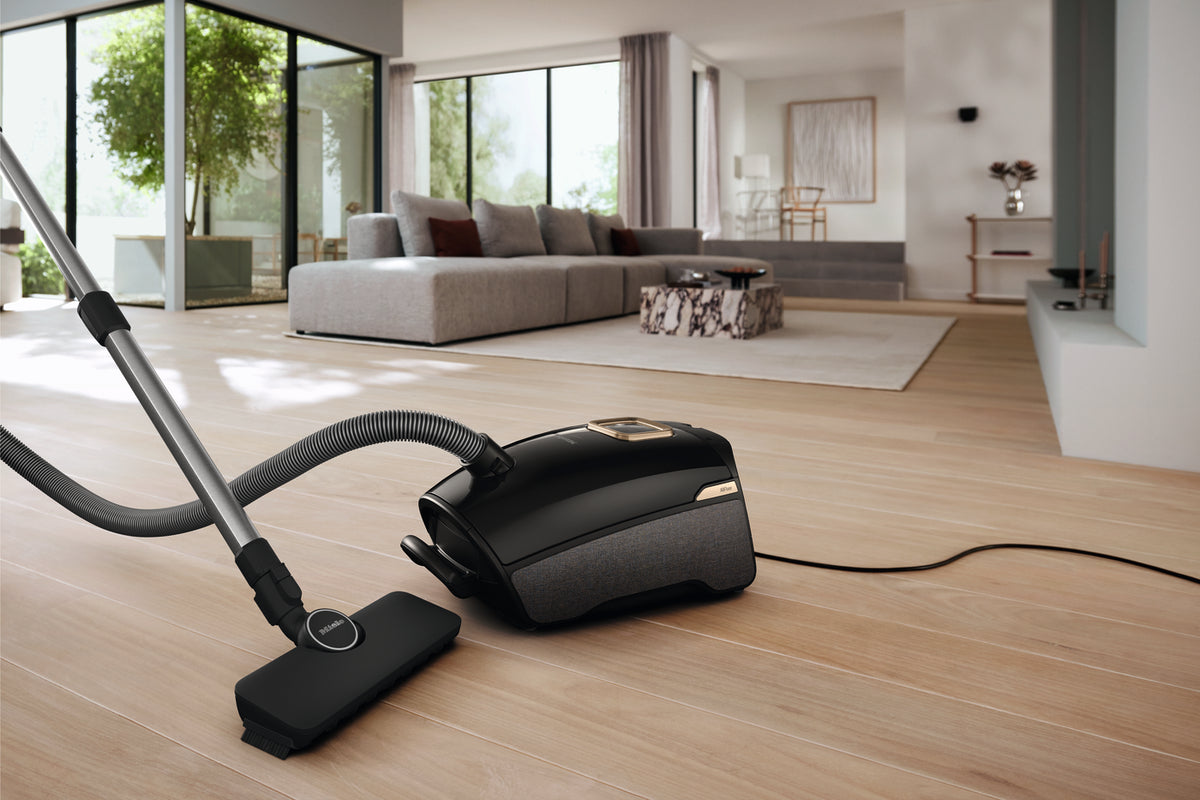
Miele canisters are a strong hardwood choice because they are smooth, controlled, and excellent with dedicated floor brushes. Models like the bagged Miele Guard L1 Electro (sold in our Avon shop only) can cover mixed flooring when paired with the right heads: Miele supplies it with both an SBD 365-3 floorhead and an SEB 228 electrobrush, a motorized carpet brush. Parquet-focused models are clean options for bare-floor homes. As of October 2026, Miele USA lists the bagged Guard M1 Parquet XL, which Miele supplies with its 16-inch Parquet Twister XL SBB 400-3 brush for large hard floors. The Miele Parquet Twister SBB 300-3 parquet brush is also sold separately. Compare current models in our Miele canister collection.
The key is matching the machine to your rugs. If you only have hardwood and a few thin rugs, a pure-suction or parquet-focused Miele can be perfect. If you have thick area rugs or wall-to-wall carpet in bedrooms, choose a model with an electric powerhead available, not just a bare-floor brush.

SEBO for Hardwood Floors
SEBO is especially strong when hardwood is only part of the story. The SEBO AIRBELT E3 Premium and SEBO AIRBELT D4 Premium canisters pair excellent carpet cleaning with hard-floor tools: according to SEBO's AIRBELT E and AIRBELT D pages, the E3 and D4 each come with a parquet brush plus the ET-1 electric power head, SEBO's motorized carpet brush. The SEBO FELIX Premium is a favorite for people who want an upright but still need a parquet brush for hardwood; SEBO includes a hard-floor parquet brush as standard and lets you switch the ET-1 brush roller off for straight suction on hard floors.
SEBO's advantage is durability and serviceability. If you have kids, pets, grit from a driveway, and rugs that need real agitation, SEBO gives you the powerhead side of the equation without abandoning hard-floor care. For the full lineup by floor type, see our SEBO vacuum buying guide.
Hardwood Floors with Pets
Pet hair on hardwood is visible, but dander is the bigger issue. A vacuum that blows fine dust around the room makes the floor look better while the air gets worse. For pet homes, choose a sealed bagged machine with good filtration. That helps keep dander contained and avoids the dust cloud that can come from dumping a bagless bin.
Also look at edge cleaning. Pet hair collects along baseboards, under cabinets, around chair legs, and behind doors. A canister with a crevice tool and dusting brush makes those areas much easier than forcing an upright into corners. Our pet-hair vacuum recommendations compare specific SEBO and Miele models by household.
What Can Scratch Hardwood Floors?
- Spinning carpet brush rolls: especially if stiff bristles contact the finish directly.
- Debris stuck under wheels: small stones or grit can drag across the floor.
- Worn floor tools: missing felt strips or damaged wheels can mark a finish.
- Cheap plastic heads: rough seams and hard edges can scrape if the tool is poorly made.
- Dragging the vacuum body: canisters should roll smoothly, not skid sideways.
Maintenance Tips to Protect the Finish
Vacuum high-traffic hardwood at least weekly and entry areas more often. Remove grit before it gets walked through the house. Check wheels and floor tools for embedded debris. Replace worn brushes. Keep bags and filters fresh so the machine maintains airflow and does not scatter debris. If you use a canister, avoid yanking the hose hard enough to make the body bump furniture legs or baseboards.
Three Hardwood Rules: Soft Brush, No Brush Roll, Remove Grit

Hardwood: Please be gentle.
Parquet brush: I was born for this.

Area rug: I need agitation.
Hardwood: Not me though.
Grit: I scratch finishes.
Good suction: Not today.
Frequently Asked Questions
What kind of vacuum is best for hardwood floors?
A canister vacuum with a soft parquet or smooth-floor brush is usually best. It removes grit without running a stiff spinning carpet brush directly against the wood finish.
Can a vacuum scratch hardwood floors?
Yes. A stiff brush roll, damaged wheels, trapped grit, or a rough plastic floor head can scratch or dull hardwood over time. Use a soft floor tool and keep the wheels clean.
Is a canister or upright better for hardwood floors?
A canister is usually better for mostly hardwood homes because the floor head is lighter and the brush can be matched to the surface. A switchable upright can work well for homes with both wood and carpet.
Is Miele or SEBO better for hardwood floors?
Miele is excellent for smooth, controlled canister cleaning on hardwood. SEBO is excellent for mixed homes that need both hardwood tools and strong carpet powerheads. The best choice depends on how much carpet and rug cleaning you do.
What is the best vacuum for hardwood floors and pet hair?
Choose a sealed bagged canister or switchable upright with a hard-floor brush and strong filtration. Pet hair is visible on hardwood, but fine pet dander is better handled by a sealed machine with good filtration.
Why People Choose Avon Vacuums
- Family-owned since 1972: we know the flooring mix in Avon, Farmington, Simsbury, Canton, and West Hartford homes.
- Authorized Miele and SEBO dealer: real floor tools, genuine parts, and full warranty support.
- In-shop service: we inspect worn wheels, brush rolls, hoses, and floor tools.
- Honest matching: we will tell you when a new brush head fixes the problem instead of a whole new vacuum.
Trying to decide between brands? Read Miele vs SEBO: Which Vacuum Is Right for Your Home? next. If your floors are luxury vinyl plank rather than wood, our vacuum guide for luxury vinyl plank floors covers that surface.
Sources: National Wood Flooring Association, wood floor maintenance; SEBO, FELIX upright, AIRBELT E canisters and AIRBELT D canisters product pages; Miele USA, Guard L1 Electro (12704580) spec sheet and Guard M1 Parquet XL (12704680) product page (checked October 2026).


