
If your vacuum has lost suction, start with the bag, filters, brush roll, and hose before assuming the motor has failed. Motors do fail, brush rolls bind, and hoses crack, but restricted airflow is one of the most common causes we see at the service counter.
This guide is the cheat sheet we'd hand you across the counter if you asked us when to swap each part on your vacuum. It covers SEBO, Miele, and VacuMaid central vacs — the three brand families we sell and service most. It explains why the schedule matters (it's not arbitrary), what the warning signs look like, and why we're so insistent that you use genuine OEM bags and filters.

Why the Bag Is a Filter
The first thing to understand is that on a premium bagged vacuum, the bag is not just a bin for dust. It is the primary filter. SEBO and Miele use multi-layer filter bags as part of a system that also includes motor-protection and exhaust filtration. SEBO's filtration page and Miele's canister instructions both describe the bag and filters as one filtration system.
The implication: when the bag fills up, you're not just running out of storage capacity. You're losing filtration. The fibers get coated, the pores get blocked, and airflow drops. The motor works harder. The powerhead pulls less. The carpet gets cleaned less thoroughly. And in the worst case, fine particles that should be trapped start punching through to the motor protection filter and beyond.
Do not judge a filter bag only by the calendar. Use the machine's bag indicator, check for reduced airflow, and replace the bag when it is full or airflow is restricted. Fine dust can restrict a bag before bulky debris fills all of its visible space.
SEBO Replacement Schedule
SEBO uses a bag indicator on every bagged canister and upright, and SEBO says it also reacts to a clog or an excessively dirty microfilter. It is a red light on the AUTOMATIC X7/X8 and ESSENTIAL G, which then shut themselves off, and it turns orange on the FELIX, DART and AIRBELT canisters. When it comes on, replace the bag then — not next week. If a fresh bag doesn't clear it, look for a clog or a loaded filter (see our guide to a full indicator with an empty-looking bag).
SEBO Bags by Series: Canisters and Uprights
The per-bag times below are our counter rules of thumb for an average home, not SEBO figures; pets and fine dust shorten them, and the indicator overrides the calendar. Every bag number by model: SEBO bags by part number.
- AIRBELT D Series (D1 Turbo, D4 Premium) — 8120AM Ultra-Bag, 1.5 gallon. Average home: roughly 2 months per bag.
- AIRBELT E Series (E1 Kombi, E2 Turbo, E3 Premium) — 8300AM Ultra-Bag, 0.92 gallon. Average home: 6–8 weeks per bag.
- AIRBELT K Series (K2 Kombi, K2 Turbo, K3 Premium) — 6629AM Ultra-Bag. Average home: 6–8 weeks per bag.
- FELIX & DART uprights — 7029AM Ultra-Bag. Average home: 6–8 weeks per bag.
- AUTOMATIC X, ESSENTIAL G & 300/350 MECHANICAL uprights — 5093AM Ultra-Bag. Average home: 6–8 weeks per bag.
SEBO Filter Replacement
- Exhaust microfilter — follow the model manual. SEBO's FAQ says to change its filters every 10 to 20 bags, depending on use and debris, sooner if one looks excessively dirty, and not to wash them. A loaded filter can reduce airflow and filtration performance. SEBO's service boxes (AUTOMATIC X, AIRBELT E and K) pair eight bags with a filter set, so using them simply swaps the filters a little early, every 8 bags.
- Motor protection (pre-motor) filter — same 10-to-20-bag schedule. This is your motor's last line of defense.
- Easiest option: buy the Service Box for your model where SEBO offers one. Eight bags plus a complete filter set in one purchase. Same logic on the X7/X8 Service Box and the X1–X5 Service Box. As of October 2026, SEBO makes service boxes only for the AUTOMATIC X, AIRBELT K and AIRBELT E; for the FELIX, DART, ESSENTIAL G, 300/350 and AIRBELT D, buy bags and filters separately.
Miele Replacement Schedule
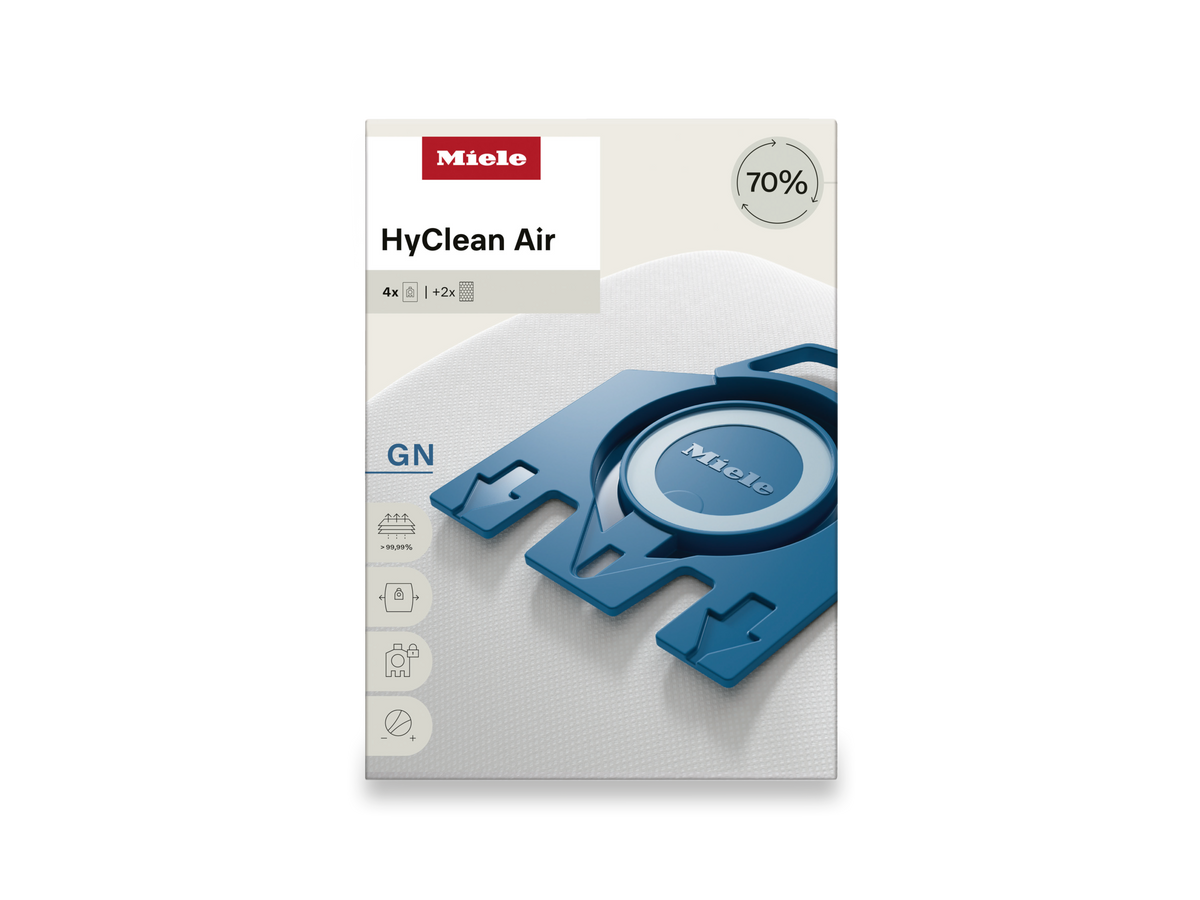
Miele's current HyClean FilterBags (and the older AirClean 3D bags still sold for some models) are multi-layer bags; Miele says their several filter layers keep vacuumed-up dust from escaping into the room air. The bag has a self-locking collar (Miele calls it HyClose) that closes automatically when you open the dust compartment, so the dust stays in the bag instead of escaping back into your home — a feature that matters more for allergy households than people realize.
Miele Bags
- Bagged canisters and legacy bagged uprights (including Guard L1, Guard M1, Classic C1, Complete C3, and Compact C2 families) — use the HyClean or AirClean dust bag specified for the exact model. For example, Miele's U.S. sheets list TU bags for the Guard L1, CO for the Guard M1 and GN for the Classic C1. Boost CX1 and Triflex are bagless and do not use vacuum bags. Find the correct bag in the Miele Bags collection; we can match it from the model number, or see which Miele bags you need.
- Indicator-driven: Miele canisters have a bag-full indicator on the body. Change when it shows full. Miele adds two caveats: fine dust such as plaster or flour can make it read full early (change the bag anyway), and lots of hair or carpet lint can fill the bag before it reacts.
Miele Filters
Miele uses two filter conventions depending on the model series — know which you have before buying replacements.
- Standard AirClean filter — every box of genuine Miele FilterBags includes an AirClean exhaust filter; replace it with each new box. On GN-bag canisters such as the Classic C1, the box also includes a motor protection filter, and Miele's instructions say to replace that with each new box too. For other models, follow the model manual.
- HEPA AirClean filter — used in allergy-focused configurations. Replace when the TimeStrip indicator (if fitted) shows it is due or at the interval in the model manual; Miele describes this as approximately one year of average use, and its SF-HA 30-1 sheet says once a year.
- Active AirClean charcoal filter — the odor-control option, popular for pet households. Replace every 12 months, as Miele's SF-AA 30-1 sheet also says.
- Bagless model filters — Blizzard CX1 and Triflex HX2 use lifetime exhaust-filter designs, but their bins and fine-dust filters still require cleaning. Boost CX1 uses a replaceable SF-HY 60 Hygiene AirClean or SF-HA 60 HEPA AirClean exhaust filter depending on configuration; Miele lists an interval of about one year and monthly fine-dust-filter cleaning.
- Browse all replacements: Miele Filters collection; check fit first with our Miele filter guide.
VacuMaid Central Vacuum Replacement Schedule
Central vacs hold the most debris of any system, but they also see the most extreme “set it and forget it” behavior. We've opened central vac canisters from Farmington Valley homes that hadn't been touched in five years. Don't be that person.
- Disposable-bag units — inspect the bag regularly and replace it when airflow drops, the bag is full, or the interval in the unit manual is reached. Home size, pets, renovation dust, and cleaning frequency can change the interval substantially. VacuMaid's own guide says to change it at 3–6 inches of dirt or any noticeable airflow drop at the cleaning tool, and never to let the canister pass 3/4 full. Match the bag to the exact model in the VacuMaid Bags collection.
- HPB-2H HEPA bag — VacuMaid's multi-layer HEPA-style bag, used by several VacuMaid filtered units. VacuMaid lists it as the replacement bag for the current SR52 and as an optional HEPA bag for the SR38. Confirm the model before ordering; shop the 3-pack or single.
- HPB1 paper bag — VacuMaid's standard sealed disposable bag, specified for the current SR38 and optional on the SR52. For an older SR, AstroVac or Valet system, check the bag number on the unit's label first; we can confirm the match. Sold as a 3-pack.
- Motor brushes & intake screens — inspect annually. Most homeowners won't need to replace these themselves; bring the unit in (or request an in-home service call anywhere in Connecticut; we confirm the visit for your address) for a service check.
Warning Signs You Waited Too Long
If any of these match what your vacuum is doing right now, change the bag and filter before assuming the machine is broken:
- Visibly weaker suction. The most obvious sign. If your vacuum was strong six months ago and is weak now and you haven't changed the bag in that window, the bag is almost certainly the cause.
- Hot exhaust or warm canister. A loaded filter forces the motor to work harder, and the motor sheds that extra effort as heat. Warm canister bodies are a leading indicator of restricted airflow. Miele says a full FilterBag or heavily soiled filters can make its temperature limiter shut the machine off.
- Brush roller spinning fine, but carpet not getting clean. The agitation is happening; the suction to remove the lifted debris isn't. That's a bag or filter problem, not a powerhead problem.
- Dusty exhaust smell. If you can smell dust on the exhaust air, your sealed filtration isn't sealed anymore. Replace the exhaust filter.
- The bag-full indicator is showing full (red on Miele canisters and SEBO's AUTOMATIC X and ESSENTIAL G, orange on other SEBOs). This isn't a suggestion. It's the manufacturer telling you airflow is restricted.
Pets and fine dust: change sooner
Pet hair adds bulk and odor, and fine dust such as drywall, plaster, flour or carpet deodorizer can plug a bag's pores while it still looks nearly empty. In a home with shedding pets, or after a dusty job, change the bag as soon as pickup drops and check the filters at the same time. If pet odor is the complaint, ask whether your model takes a charcoal filter: Miele's Active AirClean, or SEBO's 5425AM anti-odor microfilter, which SEBO lists as a pre-motor anti-odor microfilter for the AUTOMATIC X, ESSENTIAL G and 300/350 series. Check your manual before vacuuming ash or toner at all: Miele's canister instructions, for example, say not to vacuum ashes or anything that has been burning, even if it looks out, or printer and copier toner.
When suction is weak, check in this order: bag, filters, hose, wand, nozzle, brush roll, seals, and only then the motor. The first two are the cheapest fixes. Washing is a separate question; read whether you can wash a vacuum filter before you try.
Why Genuine OEM Bags and Filters Matter More Than You'd Think
Aftermarket bags exist for every brand, and they're cheaper. People ask us about them weekly. Here's the honest answer.
The bag and filter on a premium vacuum aren't generic dust collectors — they're engineered filtration components. SEBO's electrostatic 3-layer fabric, Miele's multi-layer HyClean fabric, the specific seal geometry where the bag mates to the canister neck — these are all designed and tested as a system. Aftermarket bags use thinner fabric, looser weaves, and collar dimensions that don't always seat correctly. The result, which we see on the service bench constantly, is fine dust bypassing the bag and loading the motor protection filter long before it should be. You save a little on each bag and risk shortening the life of a vacuum that cost many times more. The math doesn't work. The manufacturers agree: SEBO America's warranty excludes damage caused by non-genuine SEBO bags, filters and parts, and Miele's warranty does not cover faults caused by accessories without the Miele logo on the packaging.
Shop our genuine SEBO, Miele bags, Miele filters, and VacuMaid bags collections online. Product-page availability is the live online status. No need to call before coming in; if you want same-day showroom stock checked first, call (860) 678-0011.
Set It Up Once: A Simple Bag-and-Filter Routine
The simplest approach: buy the service box for your model (or bags and a filter set where SEBO doesn't make one) and put it on a shelf. When the bag indicator comes on, swap the bag from the box. Swap filters on the maker's schedule — every 10 to 20 bags on a SEBO; each new box of bags (standard AirClean filter) or about once a year (HEPA and Active AirClean) on a Miele — or sooner if they look dirty. You don't need a maintenance reminder app — the vacuum tells you when it's time.
This routine fits bagged SEBO and Miele machines and VacuMaid disposable-bag units. Bagless machines and other brands follow their own manuals; a VacuMaid inverted-bag unit has a permanent filter that VacuMaid says to clean about 3–4 times a year.
If you're not sure which bag fits your machine, bring it in or call us — (860) 678-0011. We've been fitting replacement parts since 1972, and there's a good chance we know yours by feel. Showroom is at 12 West Main Street, Avon, CT, Tuesday–Friday 9:30–5:30 and Saturday 9:30–3:00 (hours as of October 2026).
Curious whether your current vacuum is even worth maintaining? Read: Repair or Replace? How to Know When Your Vacuum Is Worth Fixing.
Sources: SEBO: filtration system, bags, filters and parts FAQ, AUTOMATIC X7/X8, ESSENTIAL G, FELIX, AIRBELT D, AIRBELT E, AIRBELT K, D4 bags and filters, X7 bags and filters, service boxes, warranty. Miele: canister instructions (en-US, M.-Nr. 12 905 370), GN HyClean Air bags, Guard L1, Guard M1, Classic C1, SF-HA 30-1, SF-AA 30-1, Blizzard CX1, Triflex HX2, SF-HY 60, SF-HA 60, Boost CX1 filter care. VacuMaid: paper-bag maintenance, inverted-bag maintenance, disposable-bag systems, SR52, SR38 (checked October 2026)


