
Compare a central vacuum setup with an upright, including storage, stairs, floor tools, and the practical work of cleaning each room.
Central vacuums use larger, remotely mounted power units, but raw air-watt numbers do not tell the whole cleaning story. In VacuMaid's current catalog, the SR52 and SR66 are rated at 631 and 663 maximum air watts. Portable vacuums use much shorter airflow paths and different floorheads, so the useful comparison is how the complete system performs in your home, not one number on a spec sheet.
But that's not the right question for most shoppers. The right question is: “Is central enough better, in a way I'll actually notice, to justify the install cost and the inlet routine?” For some Connecticut homes the answer is an obvious yes. For others it's clearly no. This article is the framework we use across the counter to help you figure out which household you're in.
What Actually Differs (And What Doesn't)
Strip away the marketing and there are five real differences between central and upright. Everything else is variation on these.
1. Suction is genuinely higher on central
The motor on a central unit does not have to fit inside the machine you push or carry. A properly sized VacuMaid SR66 is designed to maintain useful airflow through a central-vacuum pipe network and long hose. Actual cleaning performance still depends on system sizing, pipe layout, hose length, leaks, and the floorhead you use.
2. Filtration ends in a different place
This is the one most homeowners do not fully appreciate until it is pointed out. A portable vacuum exhausts filtered air in the room you are cleaning. A central vacuum moves collected debris to a power unit in a basement, garage, or utility area. Many systems can also be vented outdoors; VacuMaid's current catalog requires or recommends exterior venting depending on the unit and dirt-can configuration.
That separation can reduce the dust and exhaust air handled in the living space. The result depends on the model, bag or filtration setup, installation, and whether the unit is vented outside. For allergy-sensitive households, those details deserve more attention than a generic suction claim.
3. Convenience runs in opposite directions
An upright takes five seconds to pull from a closet. A central vacuum requires you to plug a hose into an inlet, drag the hose to where you're cleaning, and stow the hose afterward. Modern Hide-A-Hose retracting-hose systems reduce that friction substantially — but they don't eliminate it. For quick, one-room spot cleans, an upright wins on speed.
For 90-minute whole-house cleaning sessions, central wins, because you don't drag a heavy machine room-to-room. The hose moves; you don't move the motor.
4. Lifespan numbers are wildly different
A premium portable upright like the SEBO Automatic X7 Premium is designed to be maintained and repaired rather than discarded after a minor failure.
A central power unit also avoids much of the impact, cord, wheel, and body wear that portable machines experience. VacuMaid's current catalog lists approximately 1,500 motor hours for designated long-life residential models. Real service life varies with sizing, installation, use, airflow restriction, and maintenance, so we do not turn that laboratory-style figure into a promised number of years.
5. Noise lives in different places
Uprights are loud in the room you're cleaning. Central units are loud in the basement where you can't hear them. Cleaning a sleeping baby's room with an upright wakes the baby; cleaning it with a central hose does not.
The Cost Conversation, Honestly
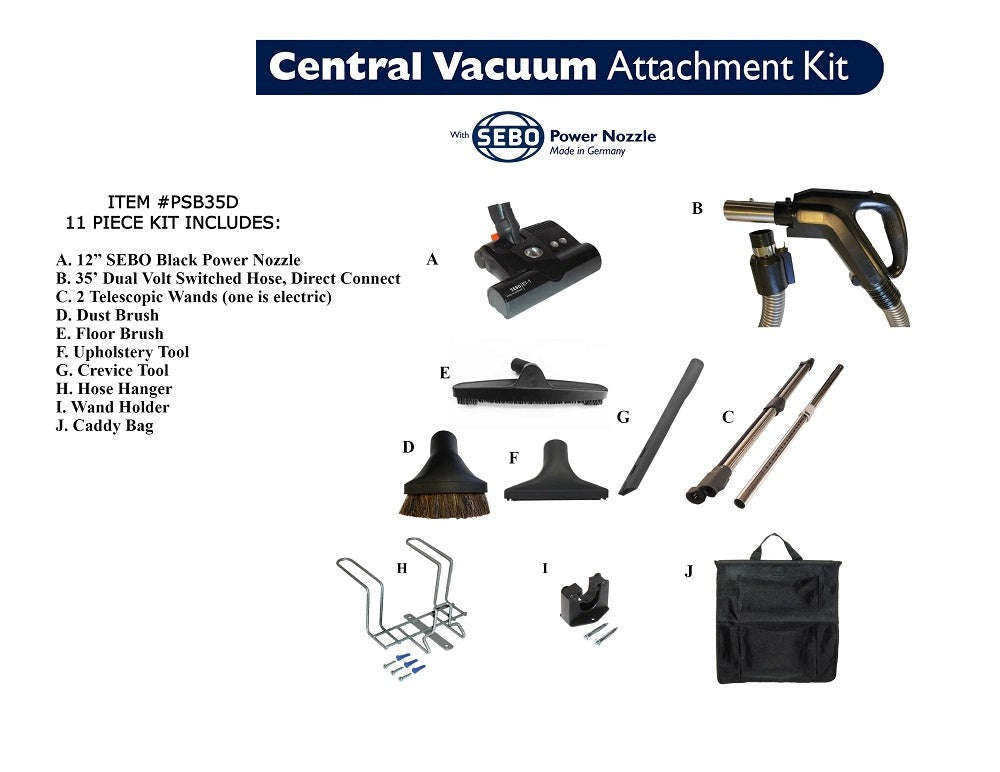
A premium upright is a single-machine purchase. A central-vacuum quote can include the power unit, pipe and fittings, inlets, hose management, attachments, electrical work, and installation labor. Existing-home retrofits also vary substantially by access and layout, while new-construction rough-ins are usually simpler.
That is why we price central systems from the actual floor plan instead of publishing a one-size-fits-all installation number. The honest comparison includes installation scope, expected use, service access, and how long you plan to stay in the home.
Who Should Pick Central
Models we install and stock:
- VacuMaid CS66 — commercial-series disposable-bag power unit for demanding installations. We size it to the application rather than treating it as the default residential choice.
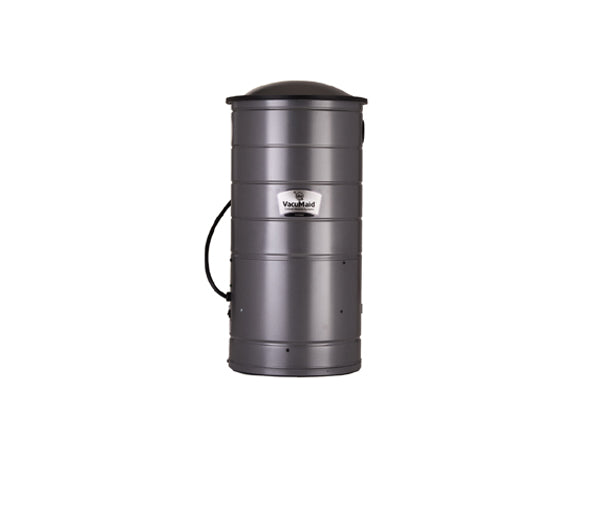
- VacuMaid SR66 — 6.6-inch two-stage tangential-bypass motor, disposable HEPA bag, 663 maximum air watts, and manufacturer sizing up to 10,000 total square feet.
- VacuMaid SR52 — 7.2-inch two-stage tangential-bypass motor, disposable HEPA bag, 631 maximum air watts, and manufacturer sizing up to 10,000 total square feet.
- Full lineup: Central Vacuums collection.
Who Should Pick an Upright
Models we recommend:
- SEBO Automatic X7 Premium — a full-size upright with automatic brush-height adjustment, bagged S-Class filtration, and a serviceable design.
- SEBO Automatic X8 Wide Track — the 15” wide-path version of the X7. Built for larger floor areas in fewer passes.
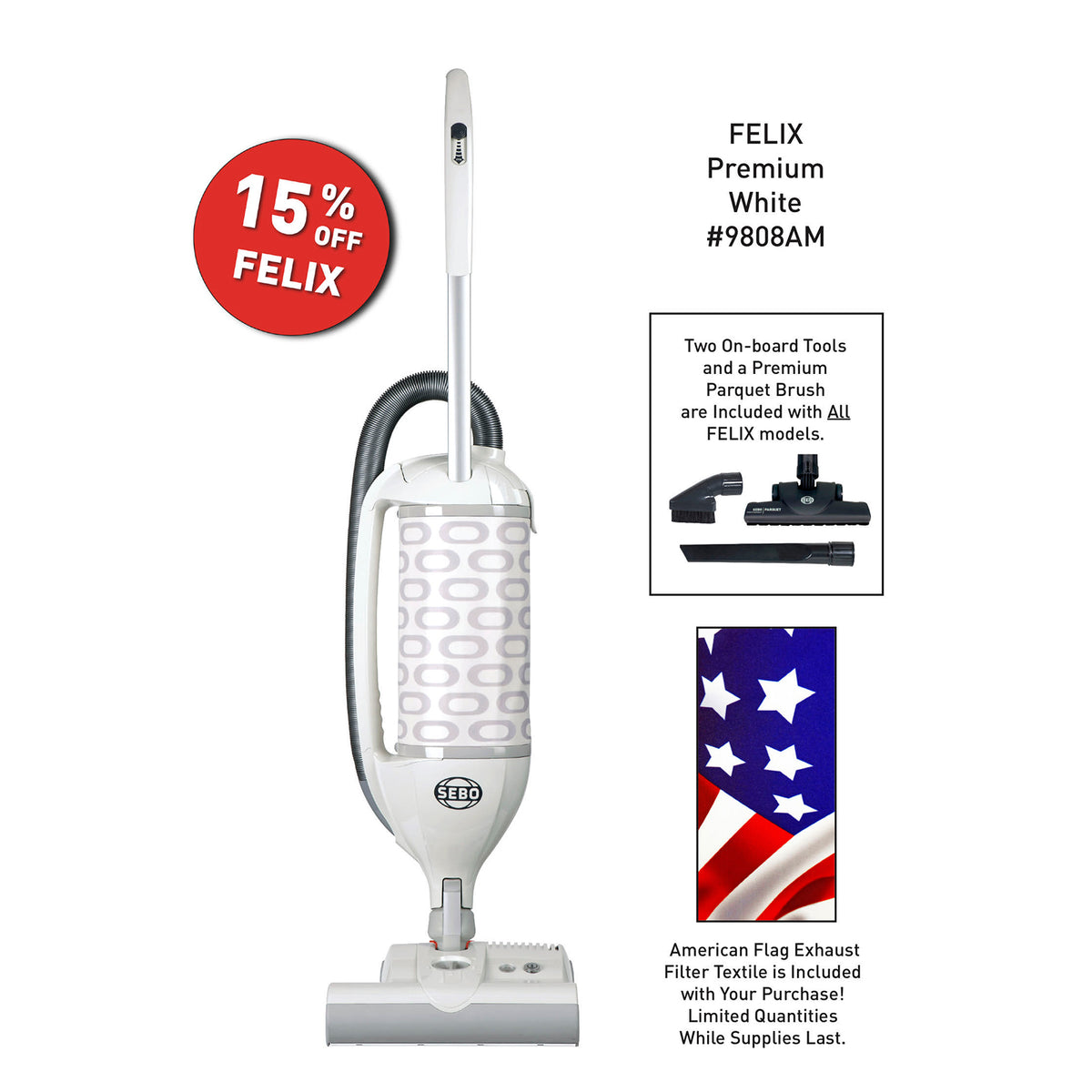
- SEBO Felix Premium — a compact swivel-neck upright with variable suction and a detachable powerhead for more flexible above-floor cleaning.
- Full lineup: Upright Vacuums collection.
The Case for Owning Both
This is the answer the marketing on both sides doesn't tell you. A lot of our Farmington Valley customers end up with a central vacuum for the deep whole-house cleaning routine and a compact portable — a SEBO Balance A1 cordless stick or a Miele Triflex HX2 Cat & Dog — for the five-minute spills, the kitchen crumbs, and the car interior. The central handles the work that benefits from massive suction; the portable handles the work that benefits from grab-and-go speed.
If you are already installing central, it can still make sense to keep a lightweight cordless machine for quick pickup. Treat that as a separate convenience decision, not a required part of the central-vacuum purchase.
Talk It Through With Us
Avon Vacuums has served the Farmington Valley since 1972. We compare central systems and premium uprights against your actual floor plan, cleaning habits, pets, stairs, and service needs so the recommendation fits the home.
Call us at (860) 678-0011 to talk through your home, or come by the showroom at 12 West Main Street, Avon, CT — Tuesday–Friday 9:30–5:30, Saturday 9:30–3:00. We'll walk you through the actual decision, on your floor plan, with real numbers. Avon Vacuums — locally trusted by generations of Connecticut families.
Want a deeper look at the central vacuum case? Read: Are Central Vacuums Worth It? 5 Reasons Connecticut Homeowners Are Making the Switch and our follow-up Do You Really Need a Central Vacuum? 7 Questions to Ask Before You Decide.


