
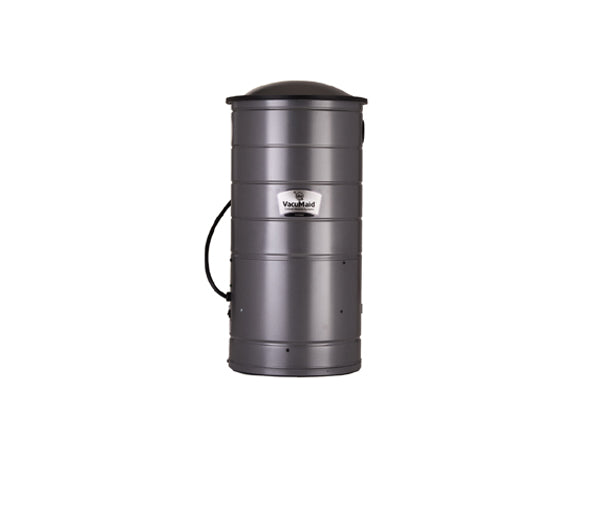
Seven questions to work through before adding a central vacuum, including layout, equipment, storage, and service access.
Central vacuum systems have been around for decades, but plenty of Connecticut homeowners still aren't sure whether they're a genuine upgrade or just an expensive luxury. At Avon Vacuums, we get this question every week — and we'll answer it the same way every time: it depends on your home, your household, and your priorities.
That answer isn't a dodge. There are real conditions under which a central vacuum is transformative, and there are conditions under which a high-end portable like a Miele canister is the better tool. Family-owned and serving Connecticut since 1972, we've installed hundreds of central vacuum systems and we've also talked plenty of homeowners out of getting one when it wasn't the right fit. Here are the seven questions we walk every prospective customer through.
1. Do You Have Multiple Floors?
This is the single biggest factor. If you're in a single-floor ranch or a small condo, a central vacuum is a nice-to-have. If you're in a two- or three-story home and you're carrying a portable vacuum up and down stairs every week, a central vacuum is a quality-of-life upgrade that's almost impossible to overstate.
With a central system, the only thing you carry is a lightweight hose and a wand. Inlet valves on each floor mean you walk to the wall, plug in, clean, unplug, and move on. The heavy power unit lives in the basement permanently. For a typical 2,000–3,000 square foot two-story home, we plan around four to six inlets — positioned so every room is reachable from at least one inlet without dragging the hose across furniture.
What we hear from multi-story customers, almost universally, after a few months: "I actually vacuum the second floor now." The friction of carrying a vacuum upstairs creates a small but persistent reason to skip it. Remove that friction and the cleaning cadence improves on its own.
2. Does Anyone in Your Home Have Allergies or Asthma?
This is the question where central vacuums move from "nice upgrade" to "meaningful health intervention." With a portable vacuum, even one with excellent sealed HEPA filtration, the exhaust still vents back into the room you're cleaning. The filtration is good, but it's never literally 100%. Fine particles and allergens that escape filtration are recirculated into the air you breathe.
With a central system, all exhaust is vented completely outside the home — those particles never return to your living space. For households with severe allergies, asthma, or eczema, this single feature consistently makes a measurable improvement in daily comfort.
The VacuMaid SR36 and SR52 collect debris in replaceable bags. Filtration and exhaust routing depend on the exact model, bag and installation. Confirm the correct consumables and whether your installed system vents outdoors; a vacuum is not a medical treatment or a promise to eliminate allergens.

3. Do You Have Pets?
Pet hair and pet dander are two different problems, and central vacuums solve both unusually well. Pet hair is visible and easy to pick up — most decent vacuums handle it. Pet dander is microscopic, airborne, and the actual cause of pet allergies — it requires sealed HEPA filtration to capture, and it benefits enormously from exhaust venting outside the home.
For heavy pet households — multiple dogs, long-haired cats, or homes where pets sleep on furniture — the VacuMaid CS66 Commercial Series is rated for homes up to 10,000 square feet and handles heavy pet hair loads without bogging down the motor. The motor's tangential by-pass design means hair and debris bypass the motor entirely — so even heavy pet households don't see the gradual suction decay you get with through-flow motors.
4. Is Your Home Under Construction or Being Renovated?
This question changes the math significantly. Tubing installation in open walls is fast and inexpensive — frequently a small fraction of the cost of retrofitting later. If your home is being built, or you're in the middle of a major renovation that has the walls open, this is the ideal time to install a central vacuum infrastructure.
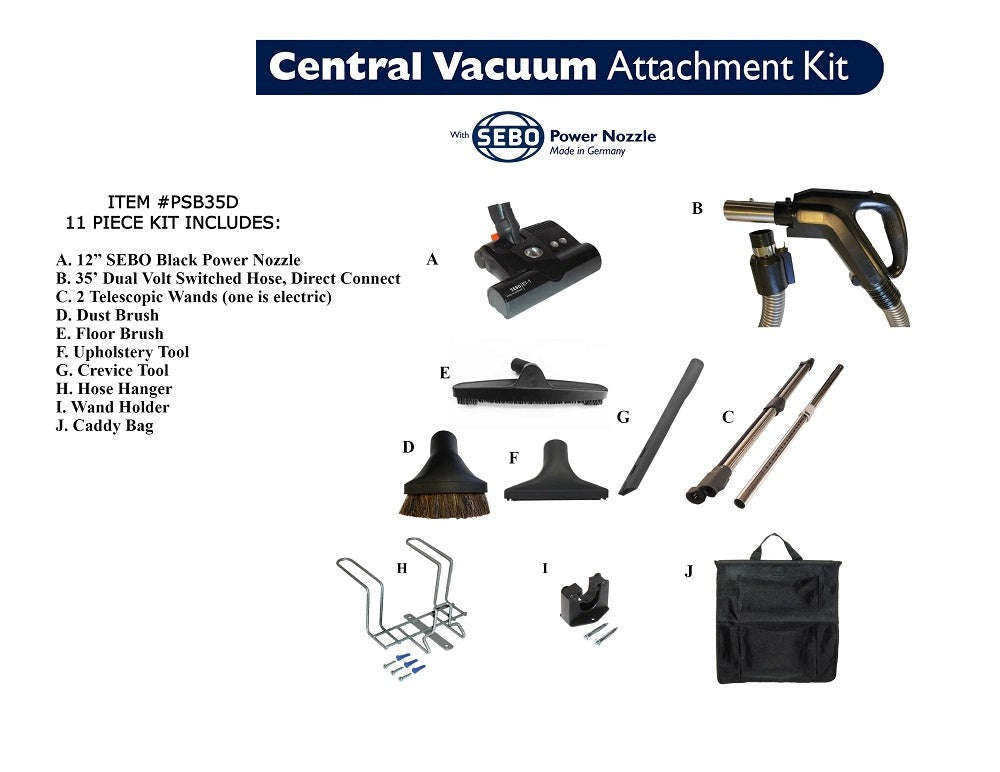
5. Can It Be Retrofitted Into an Existing Home?
Yes — and more easily than most homeowners expect. We retrofit central vacuums into finished homes throughout the Farmington Valley regularly: Avon, Farmington, Simsbury, Canton, West Hartford, Burlington, and the surrounding towns.
Retrofit installations typically route tubing through closets, along basement ceilings, and through interior wall cavities — usually without opening up large drywall sections. A typical 2,000 square foot single-family installation takes a single day. There's minimal drywall work; whatever we cut, we patch and paint cleanly. Inlet valves are flush-mounted in finished walls and look like a slightly larger electrical outlet — most visitors don't notice them at all.
Older Connecticut homes with plaster walls require a different approach in some cases. We've worked through plenty of plaster-wall retrofits and we'll inspect your specific home before quoting — every house is a little different, and the honest assessment matters.
6. How Large Is Your Home?
Power unit sizing matters. Undersized units lose suction over distance and bog down with heavy loads. Oversized units are unnecessary expense. We size every system to the home's square footage and layout — we don't guess and we don't oversell.
- Up to about 3,000 sq ft — the VacuMaid SR36 handles most homes in this range comfortably.
- Up to about 5,000 sq ft — the VacuMaid SR66 with its 6.6" two-stage by-pass motor is an excellent choice. The SR52 is a step up for homes that need extra reserve.
- Up to 10,000 sq ft, or commercial — the VacuMaid CS66 with its 3,000-hour commercial motor handles the most demanding applications.
- Permanent installation, premium build — the VacuMaid CS46 uses a steel-bodied power unit with the same 3,000-hour 6.6" by-pass motor. Built to outlast multiple owners of the home.

7. What About the Hide-A-Hose System?
Hide-A-Hose is the upgrade that tips many on-the-fence homeowners toward yes. It's a retractable hose system that lives inside the wall — when you're done vacuuming, the suction of the system itself pulls the hose back into the wall inlet. No coiling. No closet storage. No tangled hose draped across furniture between cleanings.
The practical impact is bigger than it sounds on paper. The single most common friction point with traditional central vacuums is hose storage — the 30 or 35 foot hose has to live somewhere between cleanings, and most homeowners end up with a closet half-full of coiled hose. Hide-A-Hose eliminates that entirely. Pull it out when you need it; suction tucks it back when you're done.
It's not the cheapest option and it's not right for every home, but for new construction or major renovations, it's worth seriously considering. We design Hide-A-Hose installations regularly and we're happy to walk through whether it makes sense for your specific home.
The Honest "When Not to Get One" List
We promised honest advice, and that includes telling you when a central vacuum isn't the right move.
Single-floor ranch or small condo with no allergy considerations. A high-end Miele canister is genuinely a better tool for this household. You don't get the multi-floor benefit, and a portable canister is more versatile in tight spaces.
You're planning to sell within a year or two. A central vacuum adds value, but the install cost typically exceeds the resale bump on a short timeline. Wait for the next homeowner's renovation cycle.
You don't have a basement, garage, or utility room within reasonable tubing distance. The power unit needs a permanent home with exterior wall access for the exhaust. Most Connecticut homes have plenty of options, but some unusual layouts need creative routing — we'll inspect first.
You strongly prefer the form factor of a stick or upright. Central systems use a hose-and-wand. If you really want the feel of a SEBO upright or a cordless stick, that's the machine you should buy.
What a Free In-Home Consultation Looks Like
If you've answered most of those seven questions in favor of a central vacuum, the next step is a free in-home consultation. Here's exactly what happens.
Contact our team to ask whether an on-site central-vacuum consultation is appropriate for your home and to confirm its scope and any charge. A system plan may consider floor layout, inlet placement, power-unit location, exhaust routing, tubing access, equipment, installation labor and optional features.
The whole consultation usually takes 45 minutes to an hour. There's no pressure to decide on the spot — most customers think it over for a few weeks before scheduling installation. That's how it should be.
Want the "Why" Side First?
If you're still weighing whether a central vacuum is worth it at all, our companion post — Are Central Vacuums Worth It? 5 Reasons Connecticut Homeowners Are Making the Switch — covers the upgrade case in detail, including suction, dust management, quieter operation, and resale value.
Why People Choose Avon Vacuums
- Family-owned since 1972 — over fifty years of central vacuum experience in Connecticut.
- VacuMaid sales, service & certified installation — manufacturer warranty support, factory-correct parts, three generations of central vac expertise.
- Free in-home consultations throughout the Farmington Valley and surrounding towns.
- Honest sizing and honest "no" answers — we won't sell you a system if it doesn't fit your home.
- Full retrofit and Hide-A-Hose installation — we handle everything, walls patched and painted.
- Long-term service support — we're here next year, and the year after, and twenty years from now.
Ready to talk through whether a central vacuum is right for your home? Call (860) 678-0011 or stop by our showroom at 12 West Main Street, Avon, CT — Tuesday through Friday 9:30–5:30, Saturday 9:30–3:00. We'll walk you through every option with no pressure and an honest quote. Locally trusted by generations of Connecticut homes — Avon Vacuums.


