
Weigh installation, hose storage, maintenance, and everyday convenience before deciding whether a central vacuum fits your home.
At Avon Vacuums, we've installed and serviced central vacuum systems throughout the Farmington Valley for decades. And we've noticed something consistent about the conversation: homeowners who don't have a central vacuum are skeptical, and homeowners who do have one are evangelists. The gap between those two groups is one of the largest we see in this entire industry.
If you've never lived with a central vacuum, the appeal is genuinely hard to picture. Another vacuum system sounds like more complexity, more cost, and more things that can break. But ask anyone who's switched, and you'll hear the same line:
"I'll never go back to a portable."
Here are the five most compelling reasons our Connecticut customers make the switch — and what each one looks like in real-world daily use.
1. Suction That Doesn't Compromise on Power
A central vacuum power unit lives in your basement, garage, or utility room. It doesn't have to be compact. It doesn't have to be light enough to carry. It doesn't have to fit on a retail shelf. The only design constraint is performance — and that's why central vacuum motors are categorically more powerful than anything you'd put in a portable machine.
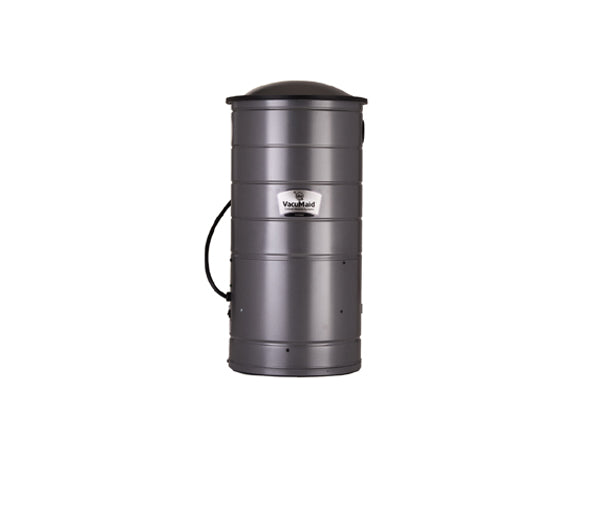
Our VacuMaid CS66 Commercial Series uses a 6.6-inch two-stage tangential by-pass motor rated for approximately 3,000 hours of service life. To put that in perspective, a residential portable vacuum motor is typically rated for several hundred hours. The CS66 isn't built to a homeowner's expectation — it's built to a commercial cleaning company's expectation, and then installed in your house.
The motor design matters as much as the size. Tangential by-pass motors pull air around the motor rather than through it. The motor stays cool, the bearings live longer, and the suction stays high through the entire service life of the machine. Through-flow motors used in many portable vacuums lose suction as the motor heats up and the bearings wear — central vacuum tangential motors don't have that decay curve.

2. True Allergen Elimination — Not Just Filtration
This is the feature that matters most for households with allergies, asthma, or anyone sensitive to airborne particles. And it's the feature people consistently underestimate before they've experienced it.
When you vacuum with a portable, even with excellent sealed HEPA filtration, the exhaust still vents into the room you're cleaning. The filtration is excellent, but it's never literally 100%. Fine particles that get past the filter — or that escape around imperfect seals during a long lifetime of use — are exhausted right back into the air you're about to breathe.
With a central vacuum, the exhaust path is fundamentally different. Air enters the inlet, travels through the tubing inside your walls, hits the bag and HEPA filter at the power unit, and exits through an exhaust port to the outside of your home. Every particle the system picks up is permanently removed from your living space — not redistributed, not filtered-and-recirculated, but physically transported outdoors.
The VacuMaid SR36 and SR52 collect debris in replaceable bags. Filtration and exhaust routing depend on the exact model, bag and installation. Confirm the correct consumables and whether your installed system vents outdoors; a vacuum is not a medical treatment or a promise to eliminate allergens.

3. No More Lugging a Vacuum Between Floors
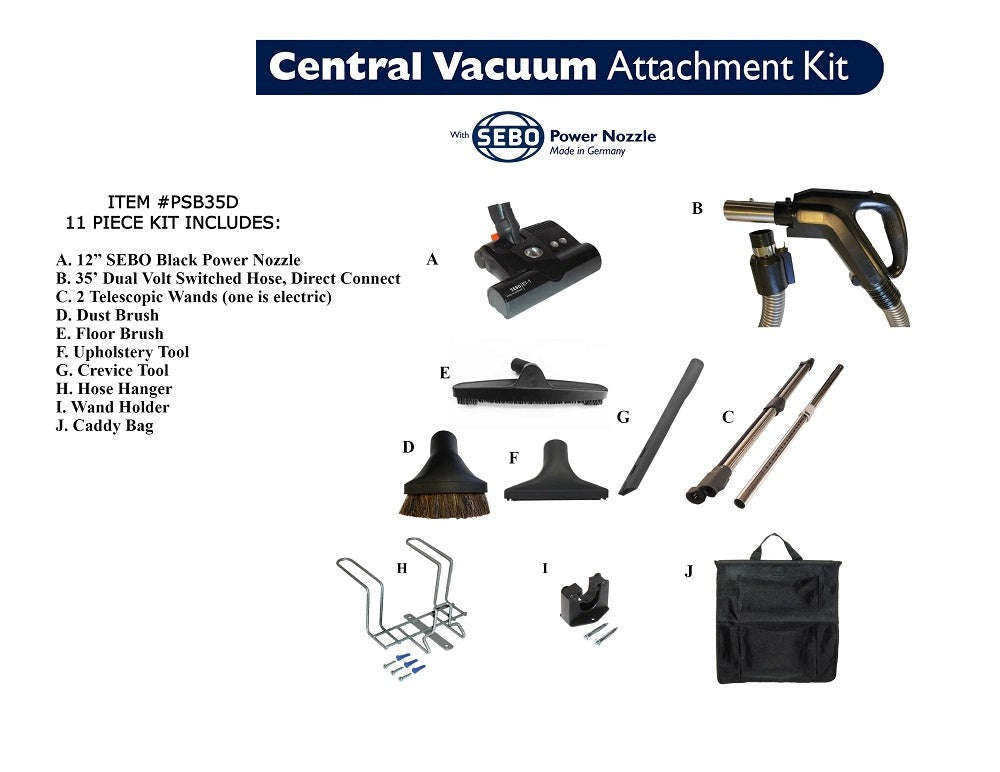
This is the quality-of-life benefit homeowners consistently underestimate until they've experienced it for a few months. With a central vacuum, the only thing you carry is a lightweight hose and a wand. The motor and dirt collection stay in the basement permanently. Inlet valves on each floor mean you walk over to the wall, plug in the hose, clean the room, and unplug. No carrying a thirty-pound machine up stairs. No untangling a power cord that's wrapped itself around banisters. No hauling a full canister down to a trash bag.
For multi-story homes, this single change is dramatic. We hear it from customers constantly: "I actually vacuum the upstairs now." That's not a minor lifestyle improvement. People who used to vacuum the second floor every other week start vacuuming it twice a week, because the friction is gone.
A typical 2,000 sq ft two-story home needs 3–4 inlet valves to cover every room comfortably. For homes 3,000 sq ft and larger, we typically design with 5–6 inlets. Hose lengths are usually 30 or 35 feet — we plan inlet placement so every room is reachable from at least one inlet without dragging the hose across furniture.
4. A Quieter Home During Cleaning
Because the power unit lives in the basement or garage, the noise stays there. The hose itself produces a soft rushing sound, and the powerhead motor on the floor brush makes some noise — but compared to a portable vacuum running in the same room as you, the difference is night and day.
Practical examples we hear from customers: running the vacuum during a baby's nap without waking them. Vacuuming the bedrooms while a spouse takes a phone call in the next room. Cleaning the upstairs while someone is watching a show downstairs. None of those scenarios are realistic with a portable vacuum, even a quiet one. With a central system, the loud part of the machine is two floors away from where you're working.
5. It Adds Real Value to Your Connecticut Home
A central vacuum is a permanent home improvement, not an appliance. It's listed in real estate disclosures, frequently called out in MLS descriptions, and seen as a desirable amenity by buyers — particularly in higher-end Connecticut homes. Real estate agents we work with in the Farmington Valley regularly mention that central vacuum is one of the small features that helps a listing stand out, especially for buyers with allergies, pets, or larger homes.
The VacuMaid CS46 uses a steel-construction power unit with the same 3,000-hour 6.6-inch by-pass motor as the CS66 — built to outlast not just the next owner of your home, but probably the one after that. When we install a system, we install it as a permanent feature of the house.

What About Installation? It's Less Disruptive Than You'd Think
The most common question we get from homeowners who are warming up to the idea is "but how disruptive is the install?" The honest answer: less disruptive than you'd expect, especially for a finished home. Most retrofits take a single day for a 2,000-square-foot home. Tubing is routed through closets, along basement ceilings, and through interior walls — typically without opening up large drywall sections. We patch and paint anything we cut. The power unit mounts to a basement or garage wall and vents through a small exterior port.
For new construction or active renovations, a central vacuum rough-in is essentially free compared to retrofit — the tubing goes in while the walls are open, and the power unit can be added later. If you're talking to a builder right now, ask them about central vacuum rough-in before drywall goes up. We can supply specs and components directly to your builder, and inspect the rough-in before it's enclosed.
Maintenance: What You Actually Have to Do
Central vacuum maintenance is genuinely minimal. There are three recurring tasks, and that's it.
Empty or replace the bag. Bagged systems like the SR36 and SR52 use disposable HEPA bags that get changed two to four times a year for typical homes. There's no dust cloud during a bag change because the bag closes itself when removed.
Replace the secondary filter. Most VacuMaid units have a secondary filter that's checked annually — a fifteen-minute task and a low-cost replacement.
Annual check-up. We offer service appointments to inspect motor brushes, exhaust port integrity, and inlet valve seals. For homes that run their system heavily, this is worth doing once a year. For typical residential use, every two or three years is fine.
Still Weighing the Decision?
Not every home is right for a central vacuum, and we'll tell you that honestly. Our companion guide — Do You Really Need a Central Vacuum? 7 Questions to Ask Before You Decide — walks through the real-world fit factors. Single-floor ranches, small condos, and households with no allergy or pet considerations sometimes don't see the full benefit of a central system, and a high-end portable like a Miele canister is a better tool for them.
For multi-story homes, allergy households, pet households, and homes over 2,000 square feet, the central vacuum case is overwhelming.
Why People Choose Avon Vacuums for Central Vacuum Installation
- Family-owned since 1972 — over fifty years of vacuum sales and service in central Connecticut.
- VacuMaid sales, service & certified installation — manufacturer warranty support, factory parts, three generations of central vac expertise.
- Free in-home consultations throughout the Farmington Valley — Avon, Farmington, Simsbury, Canton, West Hartford, and surrounding towns.
- Full installation, retrofit, and service — we handle the entire job from spec through ongoing maintenance.
- Honest sizing — we don't oversell. Power units are matched to your home's square footage, layout, and use case.
Ready to see if a central vacuum makes sense for your home? Call us at (860) 678-0011 or stop by our showroom at 12 West Main Street, Avon, CT. We'll walk you through the options, scope a free in-home consultation, and give you an honest quote with no pressure. Family-owned and locally trusted — Avon Vacuums.
Want a stricter "should I" gut-check? Read Do You Really Need a Central Vacuum? 7 Questions to Ask Before You Decide.


