
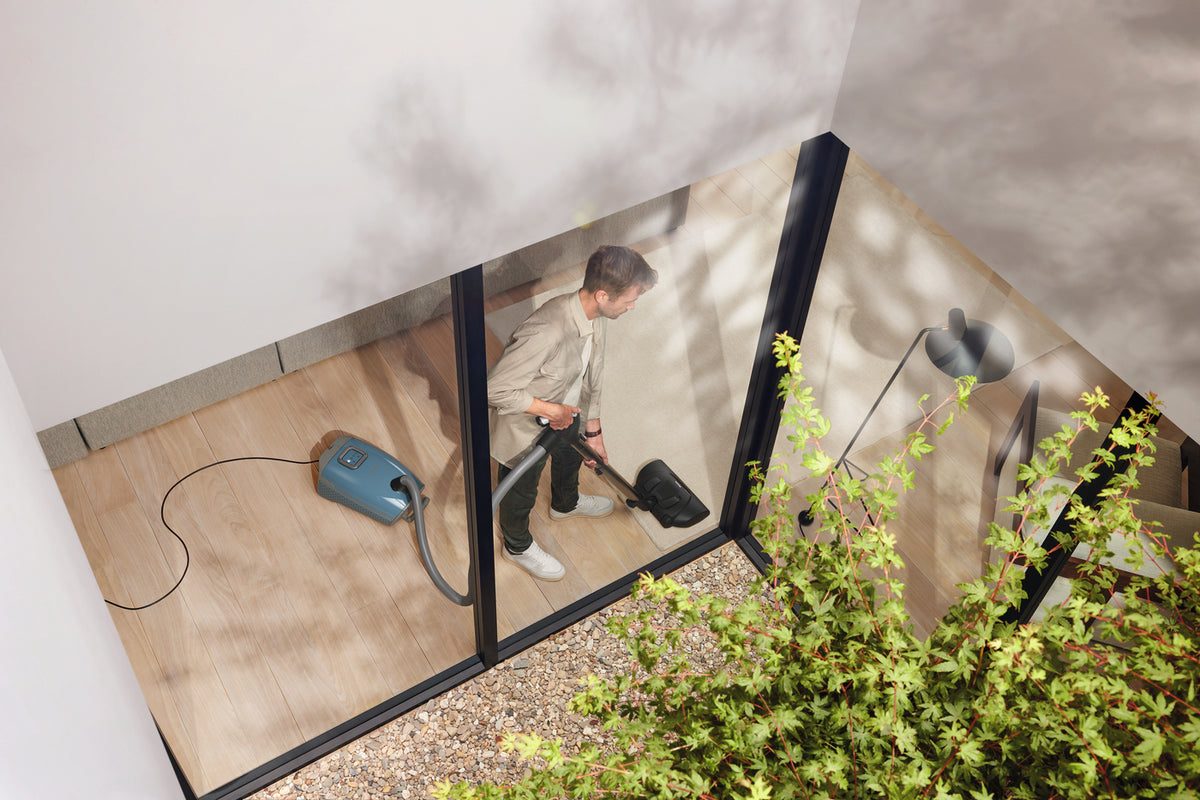
Work through a practical spring-cleaning routine, from choosing the right floorhead to checking bags, filters, and seals.
At Avon Vacuums, we know spring cleaning is more than a tradition — for many of our Connecticut customers, it's the single most important cleaning event of the year. After a long winter of closed windows, forced-air heat, dry skin, and pets shedding their winter coats, your home has been quietly accumulating allergens, dust, and indoor pollutants for months. Spring is when you finally open the windows, change the air, and reset.
But here's something most cleaning guides won't tell you: if you're doing your spring cleaning with the wrong vacuum — or with the right vacuum but wrong technique — you may be stirring up more than you're cleaning up. We've helped thousands of Farmington Valley families rebuild their spring cleaning routine around equipment and habits that actually improve indoor air quality instead of redistributing it. Here's everything that matters.
Why Indoor Air Is Often Worse Than Outdoor Air
The U.S. EPA has consistently found that indoor air can be two to five times more polluted than the air outside, and in some cases significantly more. The culprits are familiar but underappreciated: dust mite waste, pet dander, mold spores, pollen tracked in on shoes and pets, and volatile organic compounds released from cleaning products, paint, and furniture. All of these accumulate in your flooring, upholstery, and bedding over the winter — and they don't leave on their own when you open the windows.
The vacuum is the primary tool for removing those particles from your home permanently. Used correctly, it's the most effective allergen-removal device in the average household. Used incorrectly, it's an allergen-redistribution device that takes a settled problem and aerosolizes it.
Vacuuming can disturb fine particles as well as collect them. If filtration matters to you, compare the complete vacuum's published filtration specification and follow its operating and maintenance instructions.
What HEPA Really Means (And Why "HEPA-Style" Doesn't)
True HEPA filtration is a specific, measurable standard: at least 99.97% of particles at 0.3 microns are captured. That 0.3-micron point isn't arbitrary — it's the most penetrating particle size, where filters are at their absolute weakest. Particles both larger and smaller (dust mite allergens, pet dander, pollen, mold spores, smoke) are typically trapped at even higher rates. So when a filter passes the HEPA test at 0.3 microns, it's effectively trapping the things that matter at well above 99.97%.
Terms such as "HEPA-style," "HEPA-like," and "HEPA-grade" are not substitutes for a published filtration specification. Check the manufacturer's documentation for the exact filter and complete vacuum configuration rather than inferring performance from marketing language.
The other half of the equation is the sealed system. A HEPA-certified filter mounted inside a leaky vacuum body lets fine particles escape around the bag, through body seams, and past the motor — the air finds the path of least resistance, and on a poorly sealed vacuum that path doesn't go through the filter. This is why two vacuums with similar HEPA filters can have wildly different real-world allergen performance: one is sealed and one isn't.
Pre-Spring-Cleaning Vacuum Checklist
Before you start a serious cleaning weekend, take fifteen minutes to make sure your machine is actually ready to do the job. We see this every spring at the service counter — homeowners frustrated that their vacuum "isn't picking up like it used to," when in reality it's just been starved of airflow for six months.
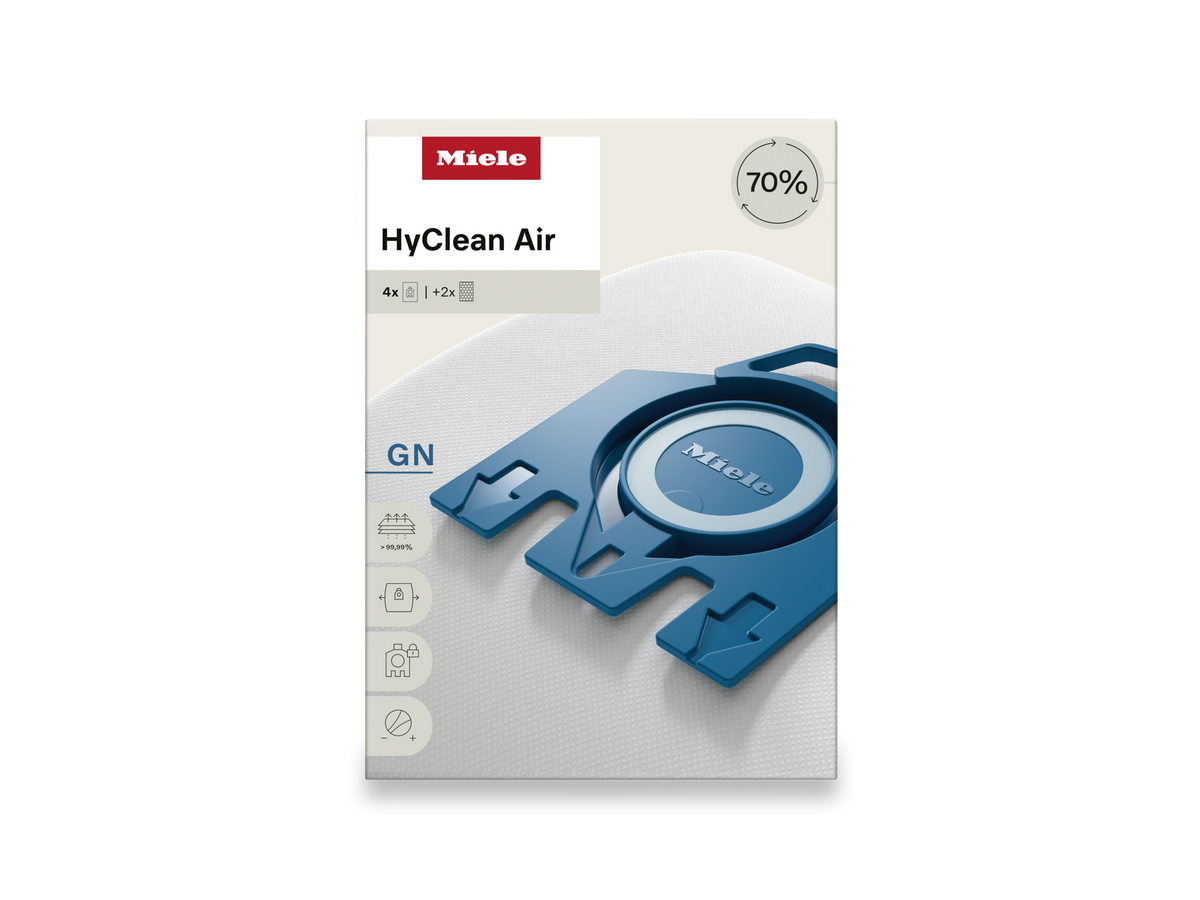
Check your dustbag. A bag that's even 70% full has already lost meaningful suction. Start spring cleaning with a fresh bag — your Miele FJM bag, Miele GN bag, SEBO D-series bag, or SEBO X-series bag, depending on your model.
Inspect your filters. Use the filter type specified for the machine and follow its manual for inspection, cleaning and replacement. The interval depends on the model, filter, use and conditions in the home; replace a filter sooner when the instructions or the machine's condition call for it.
Check the brushroll. Follow the machine's instructions for safely removing wrapped hair and fibers. If the bristles or bearings appear worn, bring the complete vacuum or floorhead in so the correct part, repair options and current price can be confirmed.
Notice the suction. If performance remains weak after the normal bag, filter and accessible airflow checks in the manual, the machine may need further diagnosis. Contact our Avon service counter to confirm the diagnostic process and any applicable charge.

Room-by-Room Spring Cleaning Strategy
Most people vacuum the same way in every room. The result is uneven cleaning — bedrooms over-vacuumed, mattresses ignored, and corners holding most of the allergen load. Here's how to actually clear the indoor environment, room by room.
Carpets and Area Rugs
Slow down. The single biggest mistake we see is fast vacuuming — pushing the head across the carpet at walking pace. Embedded debris doesn't have time to lift. The correct technique is one slow forward pass and one slow backward pass per section, overlapping each row by a few inches. On deeper-pile carpet, do a perpendicular cross-pass to lift debris that's settled along one direction of fiber.
For deep wall-to-wall carpet, a SEBO upright like the Automatic X8 with its self-adjusting brushroll is genuinely the right tool — it reads pile depth and adjusts agitation automatically. For area rugs on hard floors, a canister like the Miele Guard L1 Electro gives you the control to lift the rug edges and clean underneath without dragging the whole rug.
Hard Floors
Always use a parquet brush or hard floor tool — never a rotating brushroll. A spinning brushroll on hardwood scatters fine debris ahead of itself, can scratch finish over time, and doesn't seal against the floor for proper suction. The Miele Guard L1 AllFloor includes a dedicated hard-floor head designed for this exact purpose.
Upholstery and Mattresses
Mattresses harbor more dust mites than almost any surface in your home — they're warm, they're soft, and they collect skin cells, which is exactly what dust mites eat. Vacuum both sides of the mattress with an upholstery tool, paying particular attention to seams and edges. Do this every spring. The Miele HX-EC 20 Compact Electric Brush with a Triflex cordless is the ideal tool for mattresses, couches, and upholstered chairs.
Edges, Corners, and Baseboards
This is where the bulk of fine dust and pet hair actually concentrates — along baseboards, in floor corners, and around furniture legs. Use a crevice tool and work systematically around the perimeter of every room. If you've never done this in a particular room, the amount of debris you collect on the first pass is genuinely surprising.
Above-Floor Surfaces
Ceiling fan blades, the tops of curtains, HVAC vent grilles, and the tops of door frames release allergens every time air moves through the room. A spring vacuum with a brush attachment should hit all of these once. It's the part of cleaning most people skip — and the part that produces the most visible improvement in air quality.

The Allergen-Sensitive Household: A Different Standard
If anyone in your home has asthma, eczema, hay fever, or pet allergies, your spring cleaning routine has higher stakes — and a few additional rules.
First, the allergic person should not be the one vacuuming. Even with the best sealed HEPA system, the act of agitating carpet temporarily aerosolizes a percentage of allergens before the vacuum captures them. Have a non-allergic family member do the spring vacuum, and have the allergy sufferer come back to the room an hour later when airborne particles have settled or been filtered.
Second, replace your bag and filters before spring cleaning, not after. A fresh bag and a fresh filter give you the cleanest possible exhaust during the work itself.
Third, run the vacuum in conjunction with your central HVAC fan on. The HVAC system pulls aerosolized particles through your home's main air filter — make sure that filter is also fresh before spring cleaning, ideally a MERV 11 or higher. The combination of a sealed HEPA vacuum and a clean central filter cleans the air, not just the surfaces.
Spring Cleaning for Pet Households
Pet households need a different cadence. Pet hair is visible and easy to remove. Pet dander — the microscopic skin flakes that actually trigger allergies — is invisible and requires sealed filtration to capture. The Miele Guard M1 Cat & Dog is specifically designed for these households, with a hand turbo brush for upholstery and a charcoal-infused exhaust filter that targets pet odors as well as particles. The Triflex HX2 Cat & Dog is the cordless equivalent.
After Spring Cleaning: The Maintenance Reset
Once you've finished a serious spring clean, your vacuum has done a lot of work. This is the perfect moment to reset the entire machine for the year ahead. Replace the exhaust filter and motor protection filter so you start summer with a clean system. Restock your bag supply so you're not running on a near-empty bag for the next month. Wipe down the body, the hose, and the wand with a damp cloth — these surfaces collect dust too.
For households on an annual maintenance cycle, this is also the right time to bring the machine in for a service tune-up. Belt check, brushroll inspection, hose seal check, motor performance test — about an hour of work that adds years to the machine's life.
Why People Choose Avon Vacuums for Allergy-Sensitive Cleaning
- Authorized Miele and SEBO dealer — sealed HEPA systems, factory-correct bags and filters, full warranty support.
- Family-owned since 1972 — over fifty years guiding Connecticut families through allergy-aware vacuum choices.
- In-shop diagnosis — bring the complete machine and describe the symptoms. Ask about the current diagnostic process, timing and any applicable charge before service.
- Genuine bags and filters in stock — every Miele AirClean and SEBO Filterbox SKU we sell is the factory-original part.
- Honest advice on what to upgrade and what to keep — we'll tell you when your current vacuum is fine and when it's working against your air quality.
Stop by our Avon showroom at 12 West Main Street — Tuesday through Friday 9:30–5:30, Saturday 9:30–3:00 — or call (860) 678-0011. We'll get your spring cleaning routine set up properly and your indoor air noticeably better. Family-owned and locally trusted by generations of Connecticut homes — Avon Vacuums.
Trying to decide between a Miele and a SEBO for the upgrade? Read our side-by-side comparison guide.


