
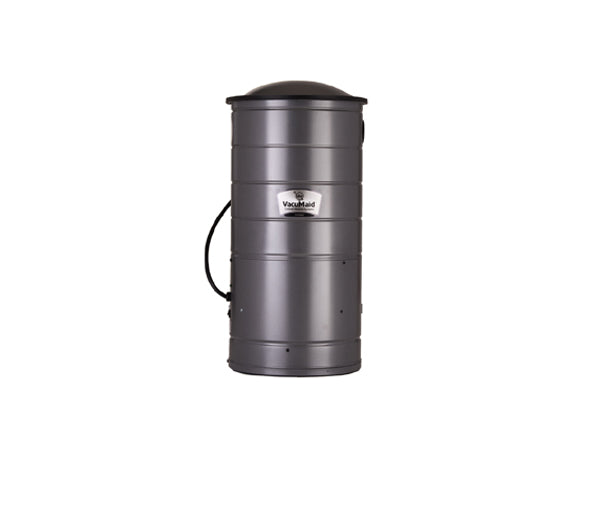
There is a 1990s colonial in Avon we have serviced for two different owners. The central vacuum bolted to the garage wall is a VacuMaid. It has outlived the first family, the home sale, and a kitchen remodel. We have changed bags, checked hoses, and handled routine service. That is the point of a good central vacuum: it becomes part of the house.

Why VacuMaid Central Vacuums Last
The motor is the heart of a central vacuum. VacuMaid uses tangential by-pass motors in the SR66, SR52 and CS66, which means cooling air for the motor is separated from the dirty air you vacuum from the house. The smaller SR38 uses a 5.7-inch Ultra 2-stage flow-thru motor instead, where the vacuumed air itself cools the motor. That matters because fine grit, pet hair, and dust are hard on motors. A system that keeps the motor cooler and cleaner has a better chance of lasting decades.
Portable vacuums live a rough life. They get dragged into walls, bounced down stairs, yanked by cords, and packed into closets. A central vacuum power unit stays mounted in a garage, basement, or utility area. The hose and attachments do the moving. The motor does not get abused every time someone cleans a staircase. VacuMaid power units are built by Lindsay Manufacturing in Ponca City, Oklahoma from powder-coated galvannealed steel, and VacuMaid says it is not unusual for a properly maintained system to remain in a home for more than twenty years.
Central Vacuum vs Portable Vacuum
A central vacuum is not just a bigger upright. The power unit can be larger because it does not have to fit in your hand or roll behind you. That allows stronger airflow and less room noise. You plug a hose into an inlet, clean the area, then move to the next inlet if needed. The motor sound is mostly where the power unit lives, not in the room you are cleaning.
The tradeoff is convenience. A portable vacuum is faster for a five-minute kitchen cleanup. A central vacuum is better for whole-home cleaning, larger homes, households that want collected dust kept away from living areas, and people who do not want to drag a heavy machine up and down stairs.
Sealed Disposable Bags Instead of Dust Clouds
Every VacuMaid system we recommend is designed around disposable bags: a two-layer sealed paper bag in the SR38 and a multi-layer HEPA or HEPA-style bag in the SR66, SR52 and CS66, in VacuMaid's wording. That keeps collected dust and pet hair sealed away from living areas. A central vacuum collects debris from the whole house, then stores it in a sealed bag at the power unit. You are not dumping a small dust cup into the kitchen trash every week. You are changing a larger bag on a much less frequent schedule.
For homes with pets, the difference is obvious. Hair is visible, but for people with pet allergies, the Asthma and Allergy Foundation of America says the trigger is a protein in dander, saliva and urine, not the hair itself. A bagged central vacuum helps keep that material contained. If the system is exhausted outside, as VacuMaid recommends for all central vacuums, the indoor-air benefit can be even stronger because the finest exhaust is not released back into the living room you just cleaned. Where a system cannot be vented outside, VacuMaid says a power unit with HEPA filtration is required. VacuMaid lists an optional HPB2H bag for the SR38 (a HEPA-style bag in VacuMaid's bag guide); ask us before planning an unvented SR38 installation.

Which VacuMaid Model Fits Your Home?
Swipe horizontally to compare every column →
| Model direction | Best fit | Why |
|---|---|---|
| VacuMaid SR38 | Smaller or mid-sized homes with shorter pipe runs (VacuMaid rates it for up to 6,000 total sq. ft.) | Good power in a practical residential package: 5.7-inch Ultra 2-stage flow-thru motor and sealed paper bag, 58 dB with vented exhaust |
| VacuMaid SR66 | Mid-to-larger homes needing more coverage (VacuMaid rates it for up to 10,000 total sq. ft.) | Popular balance of power, bag capacity, and residential fit: 6.6-inch 2-stage tangential by-pass motor and multi-layer HEPA bag, 58 dB with vented exhaust |
| VacuMaid SR52 | Larger homes or longer pipe runs (VacuMaid rates it for up to 10,000 total sq. ft.) | Largest motor of the four for demanding layouts: 7.2-inch Premier tangential by-pass motor with the highest sealed-vacuum rating here (142 inches of water) and a HEPA-style bag; louder, at 70 dB with vented exhaust |
| VacuMaid CS66 | Heavy-use homes, commercial-style longevity, very demanding cleaning | Commercial-grade direction with long motor-life expectations: a Commercial Series HEPA-bag unit with a 6.6-inch tangential by-pass motor |
The model is only half the decision. Hose length, attachment set, power nozzle, inlet placement, and installation quality make or break the daily experience. A perfectly good power unit can feel weak if the system is undersized, poorly planned, or paired with the wrong hose and nozzle. The CS66 is not listed in our online catalog as of October 2026, so ask us if a Commercial Series unit makes sense for your home.

Central Vacuum Installation in Connecticut Homes
New construction is the easiest time to install central vacuum pipe, but existing homes can often be retrofitted. Connecticut colonials, capes, split-levels, and ranches all have different routing challenges. Basements and garages usually make installation easier. Finished walls, stone fireplaces, staircases, and additions can make inlet placement more strategic.
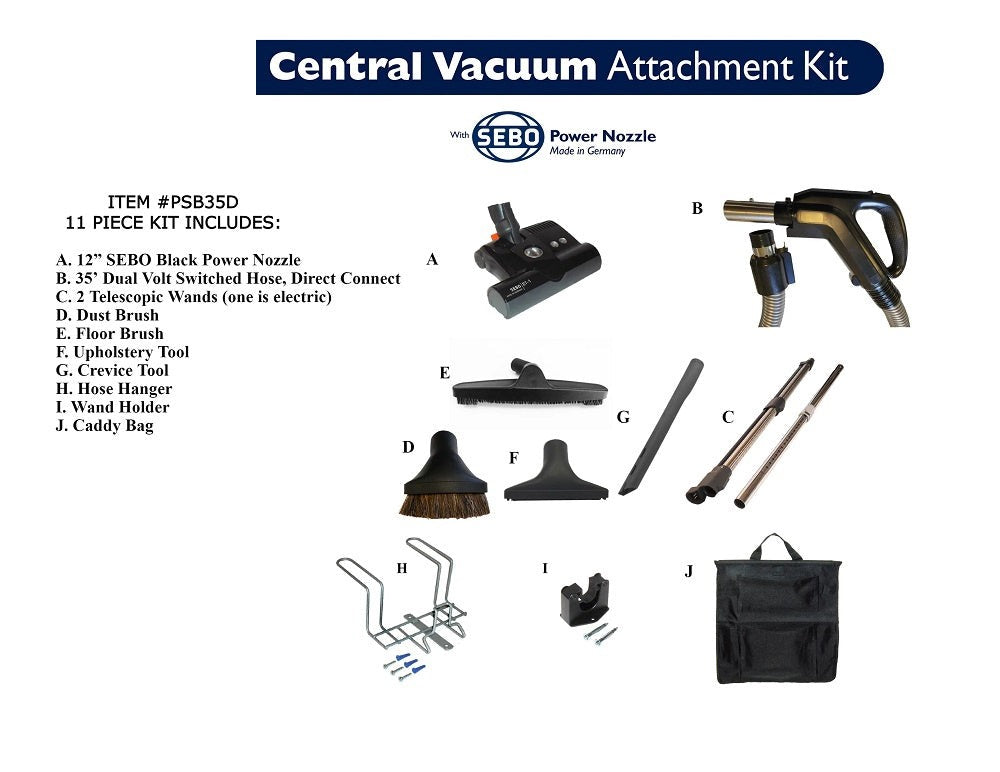
That is why local installation knowledge matters. We look at the home layout, where the power unit can live, how many inlets make sense, and whether a standard hose, retractable hose, or garage kit belongs in the plan. A retractable Hide-A-Hose system stores the hose inside the wall at each inlet, and VacuMaid lists the SR66, SR52 and CS66 as Hide-A-Hose compatible. The goal is not to cover the house with inlets. The goal is to make cleaning natural enough that you actually use the system.
When VacuMaid Makes the Most Sense
- You have a larger home: whole-house cleaning is easier when the motor is not being dragged room to room.
- You have stairs: a hose is easier than carrying a heavy upright.
- You have pets: central systems handle larger debris loads and bagged disposal.
- You want dust kept out of living areas: debris is collected away from living spaces, especially with outdoor exhaust.
- You plan to stay: central vacuum is a long-term home upgrade, not a two-year appliance.
When a Portable Vacuum Makes More Sense
Central vacuum is not always the answer. If you rent, live in a small condo, have no good place for a power unit, or mostly need quick spot cleaning, a premium portable vacuum, such as a Miele canister, may be the better investment. Many of our customers eventually use both: a central vacuum for deep whole-house cleaning and a compact cordless or canister for quick daily messes.
Three Central Vacuum Truths, Meme-Style

Portable vacuum: Carry me upstairs.
Central vac: I live in the wall.
Dust: I am staying inside.
HEPA bag: You are moving to the garage.
Homeowner: I want this to last.
VacuMaid: That is the assignment.
Maintenance: Simple, But Do Not Ignore It
Central vacuums are low-maintenance, not no-maintenance. Change the disposable bag before it is packed solid; VacuMaid says to change it at 3 to 6 inches of dirt or whenever airflow at the cleaning tool drops, and never let the canister get more than three-quarters full. Use the bag specified for your power unit (VacuMaid replacement bags). Leave the bag protector plate in place, and if a bag ever breaks, lift the plate and clean the small screen beneath it. Inspect hoses for clogs. Make sure power nozzles spin freely. If suction drops at one inlet, test other inlets before assuming the power unit is weak. One weak inlet usually points to a branch line or hose issue. Weak suction everywhere points back to the power unit, bag, filter path, or main trunk line. Our one-inlet vs every-inlet diagnosis guide walks through those checks step by step.
If the motor sound changes, the unit runs hot, or the system loses suction suddenly, stop and check airflow. Running any vacuum while starved for air is how small maintenance problems become motor problems; VacuMaid notes that poor motor ventilation makes a motor run hot and shortens its operating life.
Frequently Asked Questions
Are VacuMaid central vacuums good?
Yes. VacuMaid central vacuums are strong, serviceable, bagged systems that we regularly see running for decades in Connecticut homes.
What size VacuMaid central vacuum do I need?
It depends on square footage, pipe runs, number of inlets, hose length, and cleaning load. Smaller homes may fit an SR38 direction, while larger homes may need an SR52, SR66, or CS66 direction.
Do VacuMaid central vacuums use bags?
Yes. The models we recommend use disposable bags, which keep collected dust and debris contained and make maintenance cleaner. VacuMaid also makes inverted-bag units with a permanent filter that is cleaned rather than replaced.
Is a central vacuum better for allergies?
It can be. A central vacuum collects debris away from the living space, and systems that exhaust outside can reduce recirculated fine dust inside the home.
Who installs central vacuums in Avon, CT?
Avon Vacuums installs and services central vacuum systems throughout Connecticut. In-home availability is confirmed by address and project type before scheduling.
Why People Choose Avon Vacuums
- Family-owned since 1972: decades of central vacuum installation and repair experience.
- VacuMaid central vacuums, sold, installed and serviced by Avon Vacuums: real power units, bags, hoses, parts, and support.
- Local sizing advice: we match the system to your home layout, not a generic square-foot chart.
- Service department: we repair central vacuum units, hoses, inlets, and power nozzles.
- No-pressure guidance: we will tell you when central makes sense and when a portable vacuum is the better fit.
Still deciding if central vacuum is right for your house? Read Are Central Vacuums Worth It?.
Sources: VacuMaid SR38 specifications; VacuMaid SR66 specifications; VacuMaid SR52 specifications; VacuMaid CS66 specifications; VacuMaid disposable bag systems; VacuMaid on central vacuum motors; VacuMaid central vacuum benefits; VacuMaid on venting central vacuums outside; VacuMaid paper bag maintenance; VacuMaid inverted bag maintenance; Hide-A-Hose retractable hose systems; Asthma and Allergy Foundation of America: pet allergies (checked October 2026)


