
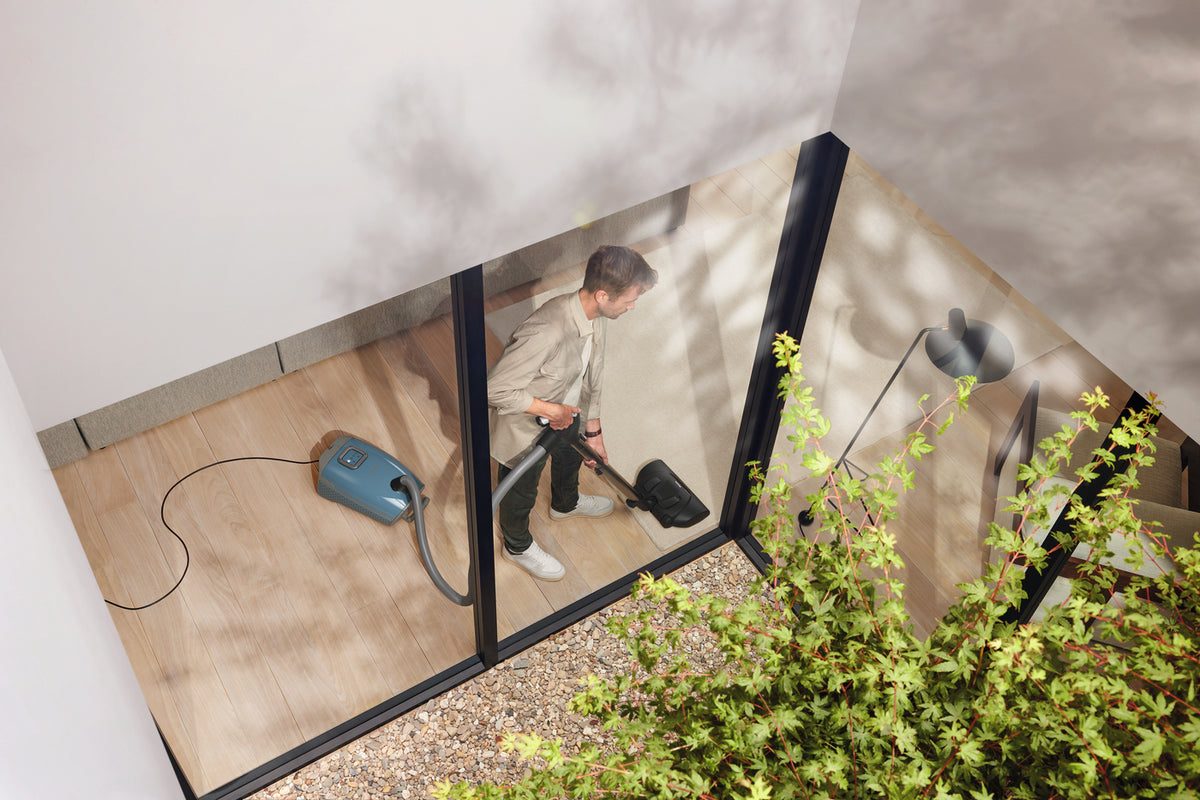
Choose a vacuum setup for luxury vinyl plank by checking the flooring maker’s care directions, floorhead, wheels, and brush settings.
Luxury vinyl plank flooring is durable, attractive, and easier to live with than many natural surfaces—but it still shows fine grit, pet hair, and streaks quickly. The best vacuum for LVP is not simply the machine with the most suction. It is one that removes abrasive debris without dragging it across the finish, lets you turn off or control the brushroll, and moves smoothly without hard plastic edges contacting the floor.
After selling and servicing vacuums in Avon, Connecticut since 1972, our short answer is this: choose a canister vacuum with a dedicated hard-floor tool for primarily LVP homes, or a well-designed multi-surface machine with a controllable brushroll when you also have carpet and area rugs. Always follow the care instructions from your flooring manufacturer, especially for newly installed floors or specialized finishes.
The quick answer
- Mostly LVP and other hard floors: start with a pure-suction canister and a wide hard-floor tool.
- LVP plus area rugs or wall-to-wall carpet: choose a model with suction control and a brushroll you can switch off or configure for hard floors.
- Pets: prioritize sealed filtration, a bagged system, and tools that pick up hair at edges without scattering it.
- Busy daily cleanup: a cordless stick can be convenient, but the floorhead design matters more than the word “cordless.”
Why LVP needs the right floorhead
LVP is built to handle daily life, but the wear layer can still be dulled by repeated abrasion. Sand, driveway grit, tracked-in salt, and small stones are the real threat. A vacuum should lift that material before it is pushed around under shoes, chair legs, or a spinning brush.
A dedicated hard-floor tool usually uses soft bristles or carefully shaped airflow channels to pull debris from the floor and along edges. Because there is no aggressive rotating brush, it is less likely to scatter crumbs or drag grit. On a multi-surface powerhead, use the manufacturer’s hard-floor setting and switch the brushroll off when that option is available. If your flooring manufacturer prohibits rotating brushes, follow that instruction even if the vacuum maker describes the head as “all floor.”
What to look for in a vacuum for vinyl plank flooring
1. A true hard-floor cleaning mode
The safest choice is a dedicated bare-floor tool. If the vacuum uses a powered head, confirm that the brushroll can be stopped or that the head has a setting specifically intended for delicate hard floors. Avoid stiff, damaged, or debris-loaded bristles.
2. Adjustable suction
Maximum suction is not always ideal. Too much suction can make a floorhead difficult to move and cause it to chatter across seams. Adjustable suction lets you keep steady airflow while the tool glides smoothly over LVP, area rugs, and transitions.
3. Smooth wheels and a low-profile tool
Inspect the wheels and underside of the floorhead. They should roll freely and stay clear of trapped grit. A low-profile head also reaches under sofas, beds, and cabinets, where dust tends to collect along the edges of plank flooring.
4. Strong edge pickup
Dust and pet hair collect against baseboards and in plank transitions. A well-designed hard-floor tool pulls debris from the sides instead of requiring repeated passes. A crevice tool remains useful for tight corners and sliding-door tracks.
5. Sealed, practical filtration
Fine dust should stay in the vacuum after it is collected. For allergy-sensitive households, a sealed bagged design reduces contact with dust during disposal and helps keep exhaust air clean. Filtration does not replace the right floorhead, but the two work together.
Our best LVP vacuum recommendations by household
Best for mostly LVP: a pure-suction canister
A compact canister is easy to guide around furniture and puts very little weight in your hand. The Miele Classic C1 Pure Suction is the kind of configuration we recommend for homes dominated by LVP, hardwood, tile, and low-pile rugs. Its appeal is control: a simple floor tool, adjustable suction, and the reach of a hose-and-wand design.
The SEBO Airbelt E1 Kombi is another strong hard-floor-oriented canister choice. It is especially worth considering for owners who value serviceability and want a machine designed around replaceable wear components.
Best for LVP plus carpet: a canister with a controllable powerhead
Mixed-floor homes need two different cleaning actions. Use gentle suction cleaning on LVP, then powered agitation on carpet. The SEBO Airbelt E3 Premium is suited to that job because it pairs canister maneuverability with a powered carpet head. For hard floors, use the appropriate hard-floor tool or approved setting rather than running an aggressive brush over every surface.
Best for quick pickups: a thoughtfully used cordless
Cordless vacuums are useful for crumbs, entryway grit, and pet hair between deeper cleanings. The Miele Duoflex HX1 Extra is a convenient option for daily maintenance. Before using any cordless head on LVP, check that the roller is clean, the wheels spin freely, and the selected mode follows your floor manufacturer’s instructions.
Browse our full canister vacuum selection or cordless vacuum selection to compare current models.
Side-by-side LVP vacuum comparison
Swipe horizontally to compare every column →
| Vacuum type | Best for | LVP advantage | Watch for |
|---|---|---|---|
| Pure-suction canister | Mostly hard floors | Gentle, controlled cleaning | Limited deep-carpet ability |
| Canister with powerhead | LVP plus carpet | One machine, separate tools | Use the correct head on LVP |
| Cordless stick | Fast daily cleanup | Easy to grab for grit and crumbs | Keep roller and wheels clean |
| Traditional upright | Carpet-heavy homes | Useful only with a suitable hard-floor mode | Avoid a continuously aggressive brush |
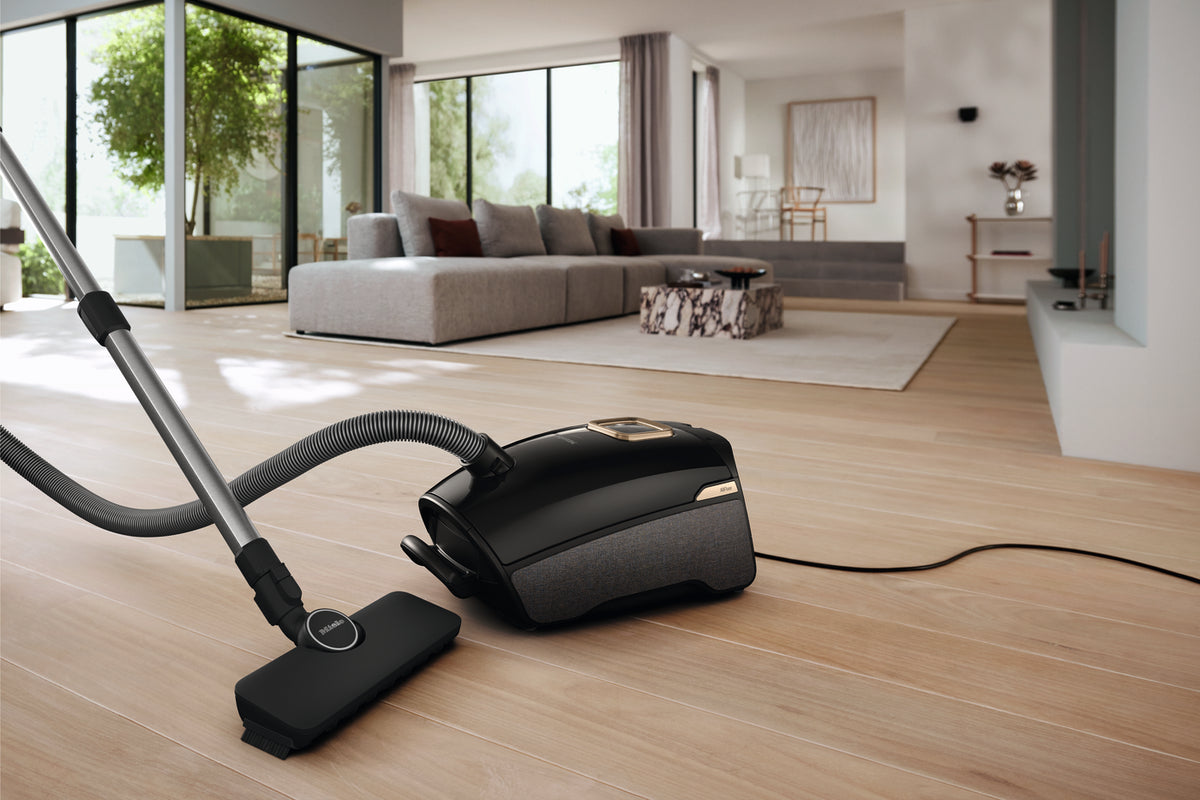
How to vacuum LVP without dulling the finish
- Check the floorhead first. Remove wound hair, grit, and anything embedded in the wheels or bristles.
- Use the hard-floor tool or setting. Turn off the brushroll when required by the flooring or vacuum manufacturer.
- Start at moderate suction. Increase only if the head continues to glide smoothly.
- Vacuum entryways early. Grit near exterior doors does more damage when it is tracked through the house.
- Move with the plank direction when practical. This helps the tool follow seams and collect debris cleanly.
- Finish edges with the right attachment. Use a crevice tool rather than scraping the main head against baseboards.
Common mistakes to avoid
- Using a dirty brushroll or wheel that has trapped a small stone.
- Assuming every “all-floor” head is approved by your flooring manufacturer.
- Running maximum suction when the floorhead is sticking or hopping.
- Letting sand and winter salt accumulate at entrances.
- Using a damaged floorhead with exposed hard plastic or a seized wheel.
- Buying only by motor power while ignoring floorhead design and serviceability.
Best choice for pet hair on LVP
Pet hair itself is usually easy to lift from a smooth floor. The harder combination is hair plus fine dander, litter, and grit around edges. A sealed bagged canister with good edge pickup is our preferred setup because it handles both visible debris and fine dust without creating a cloud when the bin is emptied. For furniture and stairs, add a suitable upholstery or handheld turbo tool rather than using the main floorhead everywhere.
Connecticut-specific advice
Connecticut homes see a changing mix of pollen, road salt, sand, and wet debris throughout the year. Place a walk-off mat at each entrance and vacuum it before the material migrates onto the LVP. During winter, inspect floorhead wheels more often; a single piece of tracked-in grit can cause more trouble than an entire room of pet hair.
Frequently asked questions
Can I use a vacuum with a beater bar on luxury vinyl plank?
Only if your flooring manufacturer permits it and the vacuum provides an appropriate hard-floor setting. When in doubt, switch the rotating brush off and use a dedicated hard-floor tool.
Is a canister or upright better for LVP?
A canister is usually the easier choice for mostly LVP because it is maneuverable and accepts purpose-built hard-floor tools. An upright makes more sense in a carpet-heavy home, provided it has a safe hard-floor mode.
Do I need HEPA filtration for vinyl flooring?
HEPA-level filtration is not required to protect the floor, but sealed filtration can benefit allergy-sensitive households by keeping fine particles from returning to the room. Floorhead design remains the first priority for protecting LVP.
Is a robot vacuum safe for LVP?
Many are, but check the flooring and robot manufacturer guidance. Keep wheels and rollers clean, remove trapped grit, and inspect the floor after the first few runs before relying on automated daily cleaning.
How often should I vacuum LVP?
Vacuum high-traffic areas and entrances whenever visible grit appears. Pet households may need quick daily passes, while lower-traffic rooms can usually be cleaned less often.
Get the right match before you buy
The floor mix matters more than the label on the box. Bring us your approximate percentages of LVP, carpet, area rugs, stairs, and pet hair, and we will show you the right floorhead on your actual surfaces—not simply the most expensive machine.
Visit Avon Vacuums at 12 West Main Street in Avon, Connecticut, call (860) 678-0011, or send us a message. We are an authorized Miele and SEBO dealer and service what we sell.


